I was interviewed by The New York Times on Nov.22.
http://www.nytimes.com/2016/11/22/world/asia/japan-earthquake-tsunami-fukushima.html?ref=world&_r=1

I was interviewed by The New York Times on Nov.22.
http://www.nytimes.com/2016/11/22/world/asia/japan-earthquake-tsunami-fukushima.html?ref=world&_r=1
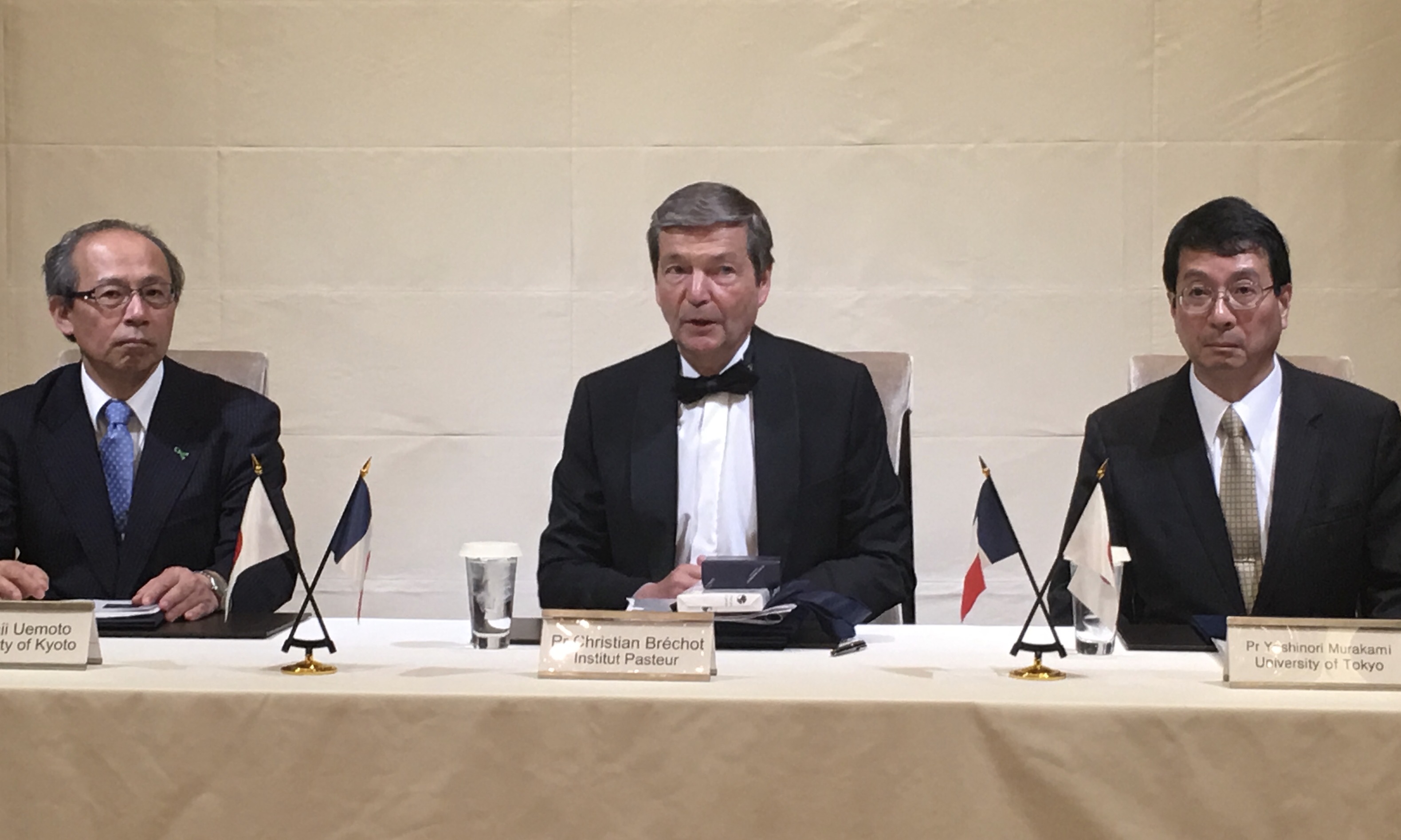
These days, I have been lucky to be invited to attend several unique parties, receptions and dinners. Barring a few, most were public events, and some were organized by embassies.
Just to give you a general idea, I attended the following events:
Birdlife International’s annual fundraising gala, (the honorary president, Princess Takamado, was unable to attend owing to the mourning for Prince Mikasa’s passing), the commemoration of the creation of the Pasteur Japan Foundation through the collaboration of Institut Pasteur, Tokyo University and Kyoto University, The official unveiling ceremony of the Intilaq Tohoku Innovation Center (in Japanese) by the Qatar Friendship Fund, The Norwegian embassy’s reception for the visit of Norway’s foreign minister, and other events organized by the French embassy, the Swiss embassy, the Dutch embassy, and the British embassy.
At one embassy, I was invited to a small lunch that would be attended by ‘around 10 people’. Turned out that I was the only Japanese invitee, the rest being Minister and the entourage of 5, and the ambassador and his staff. After some small talk, the conversation turned to the current situation in Fukushima after the nuclear disaster, as the Minister sought to learn more. Ever since I headed the NAIIC, I have found myself in similar situations more than few times.
Indeed, I recall that I was once specifically asked for by a visiting foreign dignitary, who was tired of receiving incomprehensible and non-committal replies when he had asked government officials and representatives of Japan about the kind of response Japan was planning in the aftermath of the Fukushima Daiichi Nuclear Disaster. Even taking into account the fact that there may be some errors arising due to translation, the policies of the Japanese government post-Fukushima requires some truly mind-bending and convoluted logic. It is really difficult to explain it in simple terms, probably because there is dissonance between the observations and conclusions. No wonder the hapless government officials were unable to provide reasonable answers. It is disturbing that, although the Fukushima Daiichi disaster ranks right up there as one of the worst nuclear disasters the world has seen, the response cannot be explained to a global audience.
I have written extensively about this worrying issue in the book ‘Regulatory Capture’ (in Japanese), released in March this year. It is not a trifling matter; for it deals with the trust that lies at the heart of national governance.
You may recall that I wrote in an earlier blog post (in Japanese) on the 8th of July about how a chance encounter eventually led to The Royal Ballet touring the disaster-stricken areas of Kumamoto in a show of solicitude. I also provided a sample of the extensive media coverage of this happy event.
A week later. I received a phone call from Kumamoto prefecture Governor Kabashima about an episode at a press conference. When he was explaining to the assembled reporters that the sudden visit of The Royal Ballet was thanks to his friend, Dr. Kurokawa, one of the reporters asked whether this Mr. Kurokawa was related in any way to Soseki Kurokawa.
“Well, that person is my great grandfather”, I replied. “I am also eager to know more about this ‘other Soseki’, so is it possible for you to put me in contact with the reporter who asked this question?”
A few days after this conversation, I received a letter along with some documents. Enclosed also was a request to write a short article to be included in a pamphlet that would accompany the program of a theatrical production called ‘I Love Kumamoto: Four Years and Three Months of Soseki’. This production would be touring Kumamoto and Tokyo in October and December, respectively. For those who are interested, here is my piece (in Japanese).
‘Soseki, Kumamoto, Ushigome, and myself’. I would never have expected so many happy coincidences.
Japan is commemorating 100 years of Netsuke Soseki this year. NHK, the Japanese public broadcasting company, just finished broadcasting a drama series called ‘Natsume Soseki’s Wife’ (in Japanese), and I have heard that there are various events besides. The theatrical production that will be held in Tokyo in December (in Japanese 1, 2) and in this play also featured an encounter of the two Sosekis (in Japanese). I will be happy if you find the time to visit this interesting play.
Cheers to people of Kumamoto!


My schedule was crowded from the end of September till the beginning of October. I had the meeting of the board of directors of the Okinawa Institute of Science and Technology, a reunion in Tokyo with the President of UCLA Dr Gene Block, followed by the STS Forum in Kyoto (summary of my session is here. where we heard of the news of the Nobel Prize for medicine being awarded to Dr. Osumi.), and then back to GRIPS to attend a seminar by Dr. Colglazier, former Science and Technology Adviser to the U.S Secretary of State.
Next, I flew to Hyderabad via Singapore to chair a meeting of the Board of Directors of the GHIT Fund. We visited some local medical facilities, where I observed and learned a lot of things that may prove useful. It was my first visit to Hyderabad so I had no previous point of reference to compare it to, but recalling my visit to New Delhi ten years ago, I could feel more energy in the air, and the infrastructure was vastly better. I also saw a lot of construction work going for roads and new metro (mass-transit) system.
Although there is still a long way to go before medical facilities are on par with other countries, there are some note-worthy initiatives in place. ASHA, for example, is a bottom-up initiative to ensure that health services are in place even in remote places of India. Along with improvements in infrastructure, clean water supply and telecommunications, this initiative has gone a long way in raising the general standards of health and medical services. I think that these improvements herald a new chapter in public health in India.
On the last day, we had dinner reception at the Taj Falaknuma Palace (1). Incidentally, this hotel has the world’s longest dining table which can seat 101 people. It was a truly luxurious experience.
I felt that there was a stark contrast from what I had been seeing during our field visits. This palace was filled with reminders of a bygone era when the British Empire ruled a large part of the world. I had the feeling that I was being allowed a glimpse into a past when the British were able to rule over a large empire.
Later that night, I took a flight back to Haneda, again via Singapore.
There were also a lot of other meetings, appointments, seminars and lectures, making for a hectic 2 weeks.
Bio Japan 2016 Seminar
“A Roadmap for Developing Biotech Start-ups in Japan”
Date & Time: October 14, 2016(Fri) 11:30-13:00
Venue: Annex Hall F205/F206, Pacifico Yokohama
Event Contact:
Secretariat of BioJapan c/o JTB Communication Design, Inc.
Tel: +81-3-5657-0758 Fax: +81-3-5657-0645
E-MAIL: biojapan@jtbcom.co.jp
Program → http://www.ics-expo.jp/biojapan/outline.html
Registration → https://biojapan2016.icsbizmatch.jp/en/Login
In the aftermath of the Great East Japan Earthquake, Masayoshi Son laid out a new energy plan for the future, setting up a foundation to conduct research into renewables, and at the same time expanding the boundaries of his corporation to the global scale.
It is hard to find anyone in business circles in Japan, and indeed in the world, who are as capable of generating a buzz and garnering interest as Mr. Son. It is easy to criticize and be a naysayer, but I wonder how those same critics will fare in the face of similarly fierce put-downs.
Son-san has not taken long in acting to make his new energy plan, a response to the Fukushima Daichi Nuclear Accident, a reality.
On 9th September, I was invited to take part in a panel discussion as part of a conference organized by his foundation. You can view the panel discussion through this link to the foundation’s website, as well as comment or ask questions.
The speeches of Kåberger, Dr. Lovins (at around 14 min) and Son (at around 43 min, as well as from the beginning in the second video) were all wonderful, inspring and informative. I was particularly impressed by the comprehensiveness of Son’s vision, his thoughts and views, and his ability to translate thought into action, as well as the structure of his talk. His answers to questions were also very good.
If you see his video, you will be able to understand the precarious position that Japan is in, as it is left behind in the wake of of world-movers like the US and China who change the world that we live in through their decisions and the policies that they make.
It really saddens me that the people who are in charge of energy policy in Japan, and are therefore responsible for the future of Japan, are too small-minded to participate in global debates, content instead with just looking as the rest of the world seeks change.
There is a lot of potential for new enrgineering and technologies within Japan, but so long as they are not utilized and, they will remain as they are, only potential dreams.
The Fukushima Daichi Nuclear Disaster is an accident of proportions that will remain for centuries, yet there appears to be little desire to learn from it, no major movement or indication that a definitive master-plan will be in sight.
It seems we will only be getting more of opportunistic politicians and media belonging to the ‘ruling elites and establishments’, and the researchers who support on-going agenda. Perhaps this is all part of the mindset of a ‘remote and isolated Japan’ ?
It appears that Japan’s energy policy will remain under Regulatory Capture for the foreseeable future. I had requested my publishers to prepare some copies of my book ‘Regulatory Capture’ to sell here just in front of the cofenerce hall, but the demand was beyond expectations and the book copies were sold out very quickly (in Japanese) thanks to an eager audience.


After the Noguchi Hideyo Africa Prize workshop, I went to a nearby hotel where a conference on Non-communicable diseases (NCD) was being held. I made good on a promise to deliver the keynote speech. After this talk, there was a panel discussion, which I had to leave halfway through (the audience was made up of mainly medical professionals, and I received emails congratulating me on the unexpected but important nature of my talk) to get back to the Hilton in order to attend the GHIT meeting in the afternoon.
Here at this GHIT Fund meeting, Dr. Greenwood and Dr. Coutinho, recipients of the Noguchi Africa Prize, were also on stage, making the proceedings very lively. I arrived when the panel was already wrapping up, and after the closing words, we headed out to the poolside of the Hilton Hotel where the GHIT Fund had prepared a reception.
The special artist invited to perform during this reception evening was Anyango. She is a young Japanese woman who went to Kenya to learn more about the particular African music and instrument that had so captured her imagination. After years of hard work in an apprenticeship, she became proficient enough to earn the right to play instruments, a right traditionally held by men.
She had already been on worldwide tours to promote her music, with several albums to her name. When I had inquired to her managing office in Tokyo, they told me that she was scheduled to be in Kenya during the later weeks of August, which was perfect timing, so I put in a request for her to perform.
Anyango performed with a local band, and as the performance progressed, some of our guests from African contries, went from singing together to dancing, making it a memorable evening.
Recently, she was featured in a TV program in Japan.
After the reception, I spent some time unwinding with the people of the Cabinet Office over dinner, a small gesture of thanks for all the hard work that we had put into the Workshop. I also met some of the delegates from Japan.
It was a nice ending for an enriching and thought-filled time spent in Nairobi.


As I wrote in my earlier post, the symposium of the Hideyo Noguchi Africa Prize, where I am the chair, was held at the Nairobi Hilton on the morning of 26th August.
The symposium was attended by three of the past four recipients of this award from the years 2008 (1st) and 2013 (2nd). Indeed, we relied heavily on the help of Dr. Miriam Were, who was one of the first recipients of this award, to get the cooperation of WHO-AFRO in organising this workshop.
Also, given the nature of the Hideyo Noguchi Africa Prize and its emphasis on public health of Africa, I made a special request Dr Were to invite young people who work in this area.
One of the defining features of the Noguchi Africa Prize is the emphasis on both public health and epidemiology and in medical research relevant in the African continent,. Thus, past laureates include people like Dr. Were from Kenya and Dr. Coutinho from Uganda. These two in particular are wonderful role-models for aspiring young African people, and are held in high esteem. Another recipient of the award, Dr. Peter Piot, was unable to attend for personal reasons that are elaborated in the link to my address.
The venue could seat around 100 people, and was packed to the maximum with some people even standing. The energy in the air was palpable. My address was followed by a speech by a representative of the Health Minister of Kenya, a congratulatory speech by Mr. Shiozaki, the Japanese Minister of Health, Labour and Welfare, and then by a representative of the WHO-AFRO Director.
We also showed a 6-minute video about the Noguchi Hideyo Africa Prize that was in English but simultaneously translated into French, with Japanese subtitles. This was followed by a keynote presentation by Dr. Were, and then a special Karate performance by the young people of the UZIMA Foundation created and led by Dr Were.
After a brief break, we had two panel discussions moderated by Dr. Greenwood (a laureate of 2008) and Dr. Coutinho (a laureate of 2013, both who infused the discussions with their passion for their people’s health as their major work, leading to a lively discussion.
The Workshop started at 8:30 in the morning, and began by one hour session with abut 20 young African hesalthcare leaders. At the end of engaging two panel debates, one each from the young health leaders wrapped up the talks by providing a concise overview. The abilities of these students shone through and wowed the audience.
The whole event was wrapped up by a speech by Ichiro Aizawa, Head of the Japan-Africa Parliamentary Representatives’ Association.
I was impressed by the evergreen enthusiasm and determination of the laureates that seemed to flow freely for the benefit of everyone. Perhaps this passion is what is most important character which leads to after many years, world-changing work.
More will follow in part 3.


The Dementia meeting at Todai over, I headed home for a small break. The same night, (23rd August), I had to head to Haneda to catch my flight to Nairobi via Dubai.
This was going to be the first time that the TICAD (1, 2, 3), now in its 6th Conference, was going to be held in Africa. I was on my way to Nairobi to organize and attend 3 pre-events that would be held before the actual meetings on the 27th and 28th of August.
It was late at night but there was already a long line at the Emirates counter, and many are most likely they were going to attend TICAD. Indeed, it was the first time I ever saw such long lines for a flight to Dubai. I also met some colleagues who were headed to the same destination.
The people at the counter seemed a bit puzzled as well, and I heard whispered speculations about what the reason might be. Since it was not particularly a secret that we were going to attend TICAD, I struck up a conversation and explained the reason for the unusual crowd.
You never know what small conversations like this can lead to. It turned out somehow that I was upgraded to first class for the whole Haneda-Dubai-Nairobi flight! I was very lucky.
We reached Nairobi as scheduled, and I headed to the Hilton hotel.
The weather was great, with a summer resort climate similar to Karuizawa (Nairobi is at an elevation of around 1,800m above sea level), although it is important to be careful not to get lost in the multitude of people!
On the 25th, we went to see the preparations for the TICAD. and I participated in two meetings the following day (the 26th); one with the organising committee for the Hideyo Noguchi Africa Prize and the other with the GHIT fund personnel.
In the evening, I was invited to the home of Yoshiyuki Sato (in Japanese 1, 2, 3), a very successful business man who has been in Kenya for more than 40 years. I thought that there would be more invitees, but it turned out that I was the only one invited.
The two-storied house was built on an area of around 1000 square metres, and was surrounded by nearly 1.5 hectares of lush green land. I sampled some of his wife’s cooking, with almost all the food coming from the farm. The wine, the pottery, the flowers, everything. Except for the meat, which had been bought, but I was informed that they had a herd of around 500 cattle, which was destined for the market.
Living in such an expansive manner, whether it be in physical terms like the house, or in spirit, must be liberating and a far cry from being cooped up in a crowded city. I think I understand this feeling.


I made the keynote speech about my participation in the World Dementia Council. The Ito Memorial Hall where I gave my talk was packed to its capacity of 200 people, and my talk seemed to rivet the audience’s attention.
I presented about the founding and subsequent developments of the WDC, also touching upon public-private partnership initiatives such as the EU’s EPAD and the GAP Foundation from the US. The main message that I emphasised a lot was that such platforms with a global outlook are something that we desperately need in Japan. I also tried to describe what the implications of such a platform would be.
It will be a big challenge to replicate in Japan the successes of the multi-stakeholder platforms I mentioned in the talk, but at the same time, I feel enthusiastic about meeting this challenge head-on.
A few days later, I received an email from the consul of the British embassy thanking me for the succinct explanation of the UK’s initiative in setting up of the WDC during the 2013 G8 Summit.


Its already the third time that I am visiting Toronto this year. This time, it was to attend a meeting of the World Dementia Council, the first meeting after being re-formed at the 2013 G8 Summit held in the UK.
This date was arranged to follow the week-long Alzheimer’s Association International Conference that was held a few days earlier in the same city.
As soon as I checked in at the hotel, I headed out to the ballpark where the local team the Toronto Blue Jays were taking on the San Diego Padres in an MLB game. The stadium was almost full, meaning that the only seats available were the very steep outfield (500 level) seats. I had to leave the game at the top of the 7th inning. When I opened the morning paper the next day, I found that the game had not only gone to the 12th innings, but that they had overcome a 2 run deficit to post an improbable and dramatic walk-off win. The home crowd must have gone wild! You can relive the game through the following links (link 1, link 2).
Returning to topic, at the first meeting of the new independent World Dementia Council, there were discussions of several recommendations for the agenda, a brief summary and an outlining of the transition process (1).
The WDC was till recently a council created under the purview of the UK government. This was the first meeting as an independent council, yet there was very little discussion about how the new WDC would seek to enact changes that would help distinguish it from its predecessor. There was a general emphasis of discussion about such strategic intent, and I provided my input based around these observations. I think that this repositioning from UK Government to an independent one will be more difficult than imagined, but one that will nevertheless lay the foundation for the identity of this very important group in the years to come.
As one of the nations with the highest levels of population ageing, how will Japan act in the coming years. At the G7 held in Ise-shima in May, A Vision for Global Health was outlined, and section 2-2-2.5 deals addresses the issue of dementia. Similar recognition is required at the G7 Kobe Health Ministers’Meeting. For the ‘dementia tsunami’is something that we can predict with a high degree of certainty.
I met a lot of people here including John Dirks from the Gairdner Foundation, and Peter Singer, CEO of Grand Challenge Canada, and also had the opportunity to meet Consulate General Nakayama at the embassy.
I also mention Dr. John Dirk’s name here to celebrate the fact that the Canada Gairdner Global Health Award ( one that Dr. Satoshi Omura, Nobel Laureate of 2015, received in 2014) that was started in 2009 has been renamed to honour him ahead of his imminent retirement from the Foundation.
I participated in a seminar on “Global Health Security and Response to Public health Emergencies through Better Preparedness” at UK Embassy, on June 29.