Interview with Dr. Kurokawa, former chair of the National Diet of Japan Fukushima Nuclear Accident Independent Investigation Commission (Tokyo-shinbun 2012/11/8)

Why is the ‘Nuclear Village’ being revived? According to Dr. Kurokawa, professor at the National Graduate Institute for Policy Studies and the former chair of the National Diet of Japan Fukushima Nuclear Accident Independent Investigation Commission (NAIIC), “The biggest issue is that due to weak Legislative branch of the Government, the Administrative branch of the Government is not being kept in check.”

“Although it is the job of the Legislative branch of the government to develop policies, the bureaucracy is still doing this. Meanwhile, the Administrative branch by the bureaucracies will not acknowledge that it has made mistakes. In these circumstances, there is no way that policies will change by Ministrial silos, even after the Fukushima accident.”

Dr. Kurokawa takes the view that “when the government, TEPCO, scholars, and the mainstream media colluded and declared that the nuclear plant did not undergo a meltdown, it effectively signalled the “meltdown” of all authority. A country that was supposed to be an economically and technologically advanced was seen as incredibly irresponsible and our nation lost the world’s trust.”

How can this trust be regained? Dr. Kurokawa’s answer is the “strengthening of the functions of the legislative branch,” which specifically means the establishment of independent committees like NAIIC and discussion of important policies by such committees. He explains, “NAIIC is the first case of the legislative branch functioning successfully. Because it was independent from the government and electric power companies, it was able to maintain credibility. When making important decisions, such as how to deal with the problem of spent fuel, such a commission should be established as necessary.”

In its report, NAIIC presented seven recommendations to the National Diet. Regarding the establishment of a new regulatory agency, the report recommends, “the Diet should set up a committee through which the agency will be monitored” and “the agency must have a high level of independence and strong sense of responsibility regarding its duty.” However, Dr. Kurokawa comments, “I can’t say that is taking place right now.”

“The implementations of the recommendations of this Commission will be the first step in making true democracy work in this country. In the next general election, the people must confront candidates as to whether they have the intention of implementing the recommendations.”


Japan Will Sink if It Does Not Change Now (Sankei-shinbun 2012/10/11)

We interviewed Dr. Kiyoshi Kurokawa, the former chair of the National Diet of Japan Fukushima Nuclear Accident Independent Investigation Commission, which investigated the nuclear accident at the Tokyo Electric Power Company Fukushima Daiichi Nuclear Power Plant. He explains the context of Japanese society in which the accident occurred, drawing attention to the tendency for leaders of organizations to be chosen according to the seniority system rather than by ability, and the difficulty of changing direction once decided. His tells us “if Japan does not use this as an opportunity to change, it will sink.”

Impact of Public Disclosure

–Both the cabinet and the private sector also set up their own investigation commissions, but the parliamentary panel focused particularly on the following points

“When conducting such an investigation, the investigators’ personal judgments usually have an effect. In order to prevent this as much as possible, the report tried to present only the facts, not the investigators’ personal udgments. The report did not use the phrases “nuclear village” or “safety myth.” If we use those words, readers would generally agree, “yes, that’s right.” We decided to only describe the facts in a straightforward manner.”

–Another major difference from the other commissions is that the committee meetings were made open to the public and the media

“All of the twenty commission meetings with hearings were made open to the public and were broadcast live on the website. Simultaneous English translations were also provided. It is important for the process to be transparent, and we wanted the people to see for themselves how the witnesses responded rather than the commission’s judgements.”

–Although there may have been advantages and disadvantages to public disclosure…

“We requested thirty-eight people to serve as witnesses at the commission hearings and not one declined. As TEPCO is a private company, it was not forced to submit its documents we requested, but if it declined we would only record and state that TEPCO would not release the documents. However, TEPCO ended up allowing us to inspect and view both their documents and the video records of the teleconferences among TEPCO Tokyo headquarter and Fukushima Daiichi Plant Operation Center. Media reacted strongly when the committee disclosed  the fact that there was no sound in the (teleconference) footage of when former Prime Minister Kan went into TEPCO headquarters. Later, in the end, TEPCO disclosed their records to the media. Thus, making our committee meetings open to the public was the right decision.”

Checking the Administrative Branch of the Government

–The report condemned the accident as “man-made”

“People in positions of power must act responsibly. What happens when they know but don’t do anything? It became awfully clear in this accident. Nuclear accidents have occurred in the past around the world. In the United States, after the Three Mile accident, an independent investigation report led by Dr Kemeny was released with specific recommendations similar to that of our report. What occurred thirty years ago in the U.S. repeated itself in this country. Japan knew about the Three Mile accident. Even if it did not know, Japan is a highly developed country that is even trying to export nuclear power technology. Knowing about it but not doing little by those responsible positions cannot be called anything other than a man-made disaster.”

–Why did this situation come about?

“During the period when energy shortages were a serious problem, developing nuclear power became a national policy of high priority. However, the bureaucracy only kept pushing the development forward, and there was no effective governance capability to put on the brakes when Japan needed it.”

–Does the problem lie within Japanese society?

“Both major private companies and the bureaucracy in Japan follow the seniority system within the same organization as a life-time employment. Since people are not necessarily chosen for their abilities, the problem arises that people at the higher posts can be incompetent. TEPCO is a company that has a monopoly of energy production and distribution in each regional areas. In such cases, energy companies become easily involved in regional elections and thus, in politics. Collusion became prominent as the direction shifted to everyone promoting nuclear power.”

–Does this mean that politicians are also responsible?

“In Japan, there is no mechanism to keep the Administrative branch of the government in check. The bureaucracy makes and implements almost all of the policies in Japan. So long as the bureaucracy is allowed to create the policies, they will continue to protect their interests and there will be no reason to change. NAIIC is probably the first time that the Legislative branch has functioned successfully.”

Thinking in Black and White Will Not Lead to The Answer

–Can Japanese society and politics change?

“If Japan does not use this commission report and this mechanism as an opportunity to change the governance of the Government, Japan will continue to sink. There is a need to reject the people at the top of public offices and public organizations who are incompetent thus irresponsible. The inclusion of more women, young people, and foreigners will bring about different ways of thinking and governance. Older generations will not produce different ideas and even if they do, they will tend to dismiss the new ideas.”

–The Establishment of the New Nuclear Regulatory Authority

“In our commission’s report, we recommended that regulatory bodies should adhere to the “no return rule” (officials are not allowed to return to their previous governmental agency) and that members should be individuals who intend to make nuclear regulation their careers. More Japanese should undergo training programs abroad. After ten years, they will have an international career and will be respected globally.”

–Should Japan continue to keep its nuclear power plants?

“It is necessary to think critically and to be aware of the changes in the world. Choosing between black or white, yes or no, is not the solution. We must take into account the history of the Three Power Source Development Laws (Dengen-Sanpo; the granting of subsidies to municipalities that allow the building of nuclear power plant sites). Change may not occur immediately, and there needs to be more discussion.”

Profile: Kiyoshi Kurokawa. Professor at the National Graduate Institute for Policy Studies. Born September 11, 1936. After graduating from the University of Tokyo Faculty of Medicine, he moved to the United States in 1969 and was a research assistant at the Department of Medicine, University of Pennsylvania School of Medicine. In 1979, he became professor of Medicine at Department of Medicine, University of California Los Angeles (UCLA) School of Medicine. Returning to Japan in 1983, he became professor at University of Tokyo Faculty of Medicine in 1989, and later Dean of Tokai University School of Medicine, president of the Science Council of Japan, as well as Science Advisor for the Cabinet of Japan under former Prime Minister Shinzo Abe in 2006. This year, he was chair of the National Diet of Japan Fukushima Nuclear Accident Independent Investigation Commission, which investigated the accident at the Fukushima Daiichi Nuclear Power Plant and submitted its report to the National Diet in July, calling the accident “man-made.”

 

My Perspective on the National Diet of Japan Fukushima Nuclear Accident Independent Investigation Commission (NAIIC): Making the Democratic System Work

→Japanese

I have given my views on the National Diet of Japan Fukushima Nuclear Accident Independent Investigation Commission (NAIIC) numerous times on this blog and in many other media.

If Japan does not learn from the lessons of Fukushima nor change the many systematic problems of Japanese society, I believe that it is inevitable for this country to sink. My views on this can be found in the article, “Japan will Sink if it Does not Change Now” (English translation) which was run on October 11 in the Sankei Shinbun newspaper.

My opinion is also in the recent article “Self-Approved Personnel and the Return of Rule by the Nuclear Village” (English translation) which was run in the Tokyo Shinbun newspaper (and the Chunichi Shinbun) on November 8.

Post-Fukushima, it is difficult to tell what will be the future of Japan’s accident response, the direction of the energy policy and nuclear power, the new nuclear power regulatory committee, the processing of spent fuel rods, and other such discussions and policies regarding nuclear power.

However, it is clear that adequate time must be given to discuss these issues, and that the whole debate has become narrowed into the two camps of “denuclearization” and “embracing nuclear power.”

Further, it seems that the nuclear power issues are being dealt with in a cloud of opaqueness and ambiguity. As usual, the ideas are short sighted and there is low transparency.

What are your views on this matter?

The main message of our NAIIC report is that regarding these nuclear issues, the Diet, which is the legislative branch, must keep the executive branch in check.

The separation of power into the three branches is the foundation of a democratic system. Yet, in Japan, the ministries of the executive branch both make and implement policies. There is something wrong here. The functions of governance are not working.

Recently, courts have ruled that the malapportionment of electorates when the ratio of the most populous to least populous district is 1:5, is unconstitutional. Yet, lawmakers have not done anything in response. Both the public and the legislative body had accepted the ratio of 1:3 and 1:4. The judiciary has been weak and the legislative body has not dealt with it in a responsible manner. Please think about why this is so.

My hope is that you would consider my comments and take action to push lawmakers, who you have elected into office, to implement the recommendations by NAIIC.

Such awareness and behavior is one of the key fundamentals necessary to make Japan’s democratic system work (in Japanese).


Launch of Global Entrepreneurship Week (GEW) 2012, with the support of Ambassador Roos

→Japanese 

It is now the fourth or fifth year since the start of Global Entrepreneurship Week (GEW) (1). People from over 120 countries across the world have come together for the week of November 12-18th, to celebrate, support and network with individuals who are full of entrepreneurial spirit.

The Kauffman Foundation has played a central role in leading this event, which supports worldwide innovation and the spirit of entrepreneurship.

I have also been involved from the start (1, 2, 3) and this year my organization, Impact Japan, is the host for the event in Japan.

This year, the opening ceremony was held on November 8th, earlier than in past years in order to allow for more events and presentations. It was held in the Creative Lounge MOV in the “Hikarie” building in Shibuya. Many hard-working entrepreneurs and supporting organizations came, with perhaps sixty percent of them being Japanese.

I had the opportunity to talk at the opening ceremony and spend time with the enthusiastic young entrepreneurs.

As the event went into full swing and neared the end, Ambassador John V. Roos arrived. Taking time out of his busy schedule, he gave a speech, emphasizing the importance of “the entrepreneurial spirit and innovation” and provided many kind words of encouragement and support.

The next day, I departed for Taipei for a gathering at the Chang Gung Memorial Hospital, which I had promised to attend.

I encourage you to please support the efforts and activities of the rising young entrepreneurs and Impact Japan.


Meeting the Prime Ministers of Malaysia and Norway in two Consecutive Days

→Japanese

The Prime Minister of Malaysia, Mohd Najib Abdul Razak(1) set up a ‘Global Advisory Board of Science and Innovation’ and I was also invited as a committee member.

This time the event took place in Kuala Lumpur and Johor Bahru from 1st to 3rd of November. I departed Narita in the morning of October 31st. From Kuala Lumpur Airport it took roughly an hour and a half to arrive to the hotel, and in the evening I attended the reception.

On the following day, November 1st, I had a conference at the Prime Minister’s official residence in Kuala Lumpur. Other than the Prime Minister, several cabinet ministers had attended, and updates were given on issues including food security, nutrition and environment. We exchanged various ideas and engaged in debates concerning reflection on policy, and instructions were given based on the discussion. Part of the conference focused especially on the site visit to ‘Iskandar; Malaysia Smart City Framework’ centralizing in Johor Bahr. Unfortunately I had to excuse myself from the site visit on the second and third day, and after day1, I left Kuala Lumpur and got back to Narita on the 2nd, early in the morning.

After returning home and taking a short break, I met Norway’s Prime Minister Jens Stoltenberg(1) at noon, and we had a meal together. I was the only representative from Japan and we exchanged opinions concerning various risks and government responses based on our reports, which included the National Diet of Japan Fukushima Nuclear Accident Independent Investigation Commission's (NAIIC) report on Fukushima nuclear power plants and the report by Norway’s independent committee on the mass shooting in Norway from last summer.

NAIIC’s report on Fukushima’s nuclear power plants seems to be widely read in  the world and I am delighted that there are many people who are interested in exchanging opinions on this matter, including those who hold important posts in the government.

Prime Minister Stoltenberg also made suggestions regarding exchange of opinions on ‘Global Health.’ In this particular field, Norway is known for showing great interest in global health and support for organizations such as GAVI(1) and the Prime Minister is also very keen on promoting such program. We spoke that HGPI which I am part of, recently organized a conference in collaboration with GAVI, and the mechanisms of financing global health programs as I previously discussed in early September at the Kavli Science Forum in Oslo. There, the Prime Minister emphasized the mission of Norway.

Time went by very quickly and afterwards we had interviews from Norway’s TV station and Kyodo news.

In the evening I was invited to the reception of Prime Minister Stoltenberg. Reconstruction Minister Hirano also attended the event, together with number of parties concerned and we all enjoyed seafood dishes such as salmon of Norway.

Meeting two different Prime Ministers in two consecutive days was an experience I could not have imagined. 


My Comments on Dr. Yamanaka’s Nobel Prize

→Japanese

It is wonderful that Shinya Yamanaka was recently awarded the Nobel Prize in Physiology or Medicine. In October, I met Dr. Yamanaka when he attended the STS Forum in Kyoto. I have touched upon this briefly in a previous blog post.

It is an amazing achievement with a very significant impact and the world had been waiting with high expectations. The first report was published only in 2006, so it goes to show how large an impact Dr. Yamanaka’s findings on the iPS had. I am truly overjoyed.

Regarding the Nobel Prize, I have written about it many times on this site, and this time I was asked by many newspapers to give my comments. I continue to hold the same view as I have in the past(in Japanese).

My opinion focuses on the issue that faces Japanese universities and society at large, and is thought to be the norm in Japan- the “vertical society.”

I have explained my views in the following articles:

1.  “The University of Tokyo and the Nobel Prize” (in Japanese)

2.  “Why it is Difficult for the University of Tokyo to Create Nobel Laureates” (in Japanese)

3.  “The Noble Prize and the Academy Awards” (in Japanese)

4.  “Cultivation of the Future Generation is Fundamental to the Nation” (in Japanese)

5.  “Celebrating the 100th Year of the Nobel Prize” (in Japanese)

6.  “Japan’s Challenges for Training Future Scientists” (in Japanese)

7.  “Cultivating the ‘Nail that Sticks Out’ through World Exchange” (in Japanese)

The impact of the research conducted by Dr. Yamanaka and others like him is not merely something that can be measured by the “impact factor.” Rather, it has IMPACT on the whole world.

This kind of research is often born out of the rebellious spirit that comes not from the mainstream way of thinking, but from the "crazy ones."(1)

At this time in the twenty-first century, there have been eleven Japanese who have been awarded the Nobel Prize. Out of these eleven, Dr Nanbu (Noble Prize in Physics), Dr. Shimomura (Chemistry), and Dr. Negishi (Chemistry) have built their careers abroad, in the United States. Dr Tonegawa is also a similar case, having worked in San Diego and in Basel.

You must not be afraid to be “the nail that sticks out” or one of the “crazy ones.” For it is the nail that sticks out that changes the world. 


From Nairobi -3: Returning to the Olympic School, where the foundations of diplomacy begin

→Japanese

Day three in Nairobi.  Today, as I took no part in the conference, I visited the Olympic School(1) accompanied by a member of UZIMA.  This is a public school for children of Kibera slum and located at an edge of the slum, which is known as the ‘largest slum in the world.’

When I was WHO Commissioner six years ago (June 2006), I visited this place and was extremely moved.  As one of the public elementary schools in Kenya (they have grades 1-8 and there are about 200 schools in total), it attained the highest grade in Kenya (actually the top in the country; although slightly dropping recently, still in the top 10), and this result enabled the students to progress to public high school.  The top ten percent of students with the highest grades can continue their studies in the public high school (4 academic years).

Over last 10 years, the number of students enrolled increased from about 1,700 to 3,000 and the twenty-six (26) teachers seem extremely busy.  With the class full of students, one textbook is shared among six to eight students (the textbooks cannot be brought back home, which is in the slum district) and they study together.  Some of the rooms are very dark as there are no lights, but they are still packed with students.  One class has approximately seventy to ninety students.

Lunchtime is about forty minutes and the lunch is boiled corn (maize).  I tried a bit myself, and could imagine how tough the situation was for the students and was amazed at how they coped with it.  To understand that this kind of world exists through experience is certainly important.

When I visited some of the classrooms I was greeted by all the students and their teachers.  I could notice that they were disciplined as well.

Since we could not immediately find visitor’s notebook in the principal’s office of 2006 when I visited six years ago, I wrote a similar message again on this occasion.  Whenever the young people I know go outside of Japan and to Africa and e-mail or tweet “Off to Nairobi…” I recommend them to visit this school.  A few of such young people I know read my entry of 2006.

What I wrote there was the following:

Most moving experience of my life

I saw the future of the nation

When you have the opportunity to go to Kenya, I suggest you to visit the Olympic School.

In the afternoon I visited the CEO of NCST (National Council of Science and Technology) of Kenya, Prof. Shaukat Abdulrazak (1).  The chairman of the board of directors, Prof. Vasey Mwaja, was also present, and we had a pleasant chat for about an hour. Both of them once studied and lived in Japan and one can feel their passion for Japan.  This is the process that is most valuable for international contribution.

GRIPS National Graduate Institute for Policy Studies, one of the bases of my work, is a graduate school that encourages this process.

My stay in Nairobi is almost over. In a few hours I will be leaving the hotel and heading back home.

From Nairobi -2: Hideyo Noguchi Africa Prize and Young Japanese Pursuing Career in the World

→Japanese

My second day in Nairobi.  There are many young Japanese people out there whose activities are noteworthy.  Most of them are involved in work done through JICA; but there are others who work at international organizations or are currently studying abroad.  They are involved in regions like Gabon, Congo, Kenya, Burundi, Senegal, and Palestine.  Most of them are young women, who have enormous presence and strength of will.

In addition, the efforts of the driving force behind the whole conference: Professor Yasuhide Nakamura of Osaka University and his team of students, Dr. de Los Reyes and doctorate students, as well as the people from HANDS(an organization that was born out of Professor Nakamura's efforts), have ensured the steady spread of their activities to Kenya and Ethiopia.

I also met some young Japanese students who, after studying abroad in America, have moved on to careers which take them to Africa.  Indeed, there are a lot of young people who are making a name for themselves.

Yesterday, I was overjoyed to receive the following e-mail from one of the participants whom I had met for the first time.

To Doctor Kiyoshi Kurokawa

I spoke with you at the MCH booklet conference today and am currently enrolled in a Masters course at the UCLA School of Public Health.  I have been in Kenya for the past two months.

Dr. Kurokawa's messages, like "challenge your self across disciplines and national borders, and meet different people", "turn your efforts towards the world" inspired me when I was still a medical student.  I went on to extern in US at an hospital, take courses for two months at a medical school in Canada, and also extern at a clinic set up by a NGO in East Timor.  I recall now that I although I was not fluent in English, I was very adventurous and I can only describe it as my being excited at being able to turn my efforts towards the world.  I remember reading your inspiring words sent to students of Tokai University, and I also enjoyed reading the diaries of students of my age of Tokai University doing externs in US medical center.

After graduating, I received training at Okinawa Prefectural Chubu Hospital, after which I went to a small island called Kumejima off the Okinawan coast where I gained clinical experience.  Here I was shocked and surprised at the fact that health disparity exists even within Japan, and this translated into a desire to learn more about social determinants of health, community empowerment, social capacity building, which
led me to UCLA where I enrolled in Community Health Sciences, all of which have led to my being in Kenya.

Of course I had no way of knowing that things would turn out this way, of determining my course with big dreams and ambitions.  But as I made decisions at each turning point in my life, often choosing something that interested me, I find myself quite far away from home.  I believe that my course in life was a result of my having learnt during my student years the joy of meeting different people and constantly being challenged.

During this stay at Kenya as well, I have had the opportunity to visit the home of one of my classmates at UCLA who comes from a small town in the country.  She suggested I go to her house, and I decided to
accept, and that is why I found myself on a crowded minibus known locally as a ‘matatu’ headed to my friend's house. Although they were not wealthy, they welcomed me with open arms and gave me love and affection, and when the time came to part ways, I found tears rolling down my cheeks.

The world is wide, yet is somehow similar.

My challenges and worries have not ended. I am still searching for a way in which to use what I have learnt.

I would like to express my appreciation for your inspiring words which have given me the strength to push on, and I am eagerly looking forward to more.

In the evening, we had special sessions for the Hideyo Noguchi Africa Prize (1, 2).  The program started off with a 'kamishibai' play about Hideyo Noguchi by a young man and woman from the UZIMA Foundation, an organization set up by Dr. Were.  This was followed by an overview of the Hideyo Noguchi Africa Prize using video images, an address by me as the chairperson, video footage of Miriam Were from Kenya, one of inaugural laureates of the prize at the TICAD4 held in Yokohama, a testimony by Tomohiko Sugishita, a surgeon who has been working in Africa for more than 10 years after being influenced by Hideyo Noguchi in his younger years and also his current study under Dr. Were and the moving story involved; the session was wrapped up by a passionate speech by Dr. Were.

The evening ended with a reception.  Mr. Yoichiro Yamada, Deputy Chief of Mission of Japanese Embassy in Kenya also attended.  Everybody danced together, and we spent a very enjoyable time.

Education which leads to young confident people who are making a difference in the world through their activities is a priority, and such young people are creating a foundation of trust across nations.


London and Onwards to Nairobi: The Hideyo Noguchi Africa Prize

→Japanese


Photos in Nairobi by Mr O.T. Belarga of Osaka University Graduate School of Human Sciences.

My flight for London was
delayed in its departure from New York, and so I was informed beforehand that I
would not be reaching Heathrow in time for the connecting flight to Nairobi.
Luckily, I had some leeway in terms of my schedule in Nairobi, and so there
were no major problems. I booked a night at the Sofitel Hotel close to the
Heathrow airport.

I had dinner in London with
one of my friends and his family, as well as a Japanese student who interned at
NAIIC and is currently studying political science at Oxford. We went to a
Japanese restaurant and had a lively talk (photo).

I headed to Nairobi the
next day, reaching my destination at around 9 p.m where I was greeted by an
official of the foreign ministry of Japan and then escorted to my hotel. The 8th
International Conference on the MCH Booklet
would be held over a period of 4
days starting the next day  . This is a conference that is set up and run jointly by Professor
Yasuhide Nakamura of Osaka University and HANDS.

As you might know, the
Maternal and Child Health (MCH) booklet is one of the successes of the ODA of
Japan in the Asian region. The next region being targeted was Africa and elsewhere
this was the theme of the conference.

I’ve heard that the Kenyan
Government and Dr. Miriam Were, who was a recipient of the 1st Hideyo Noguchi Africa Prize 4 years ago
were doing their utmost to make the conference a success. Not only were there
some international organizations, but also representatives from various African
and Asian countries as well as Palestinian countries. All in all, there were
participants from around 30 countries.

The session started early
the next day at the Multimedia University of Kenya. In Kenya, the Ministry of Public Health and Sanitation (MPHS) and Ministry of Medical Services are separate entities, and I felt
that this was a very practical and logical approach.

I took part in the Opening
Plenary Panel with Dr. Were, the Minister of Public Health and Sanitation
Honorable Beth Mugo. The current Japanese Deputy Chief of Mission to Kenya H.E
Yoichiro Yamada used his own MCH booklet in his explanations, and this was very
persuasive. In this panel, I had a 25 minute talk titled “Japan Support
for Global Health and the Hideyo Noguchi Africa Prize”.

During the break, I was
able to mix with a lot of people from different nations, but I talked to many
young Japanese working Kenya and elsewhere overseas, the majority of whom were
women. I also met a nurse who was part of my team in Phayao, Thailand where I
was in charge of a project for prevention and control of AIDS. After that
project, she had gone to Africa where she was currently working. I thought it
wonderful that one could have reunions like this. The lively contribution of
young Japanese to the world gladdens me.

Tomorrow evening is the
session for the Hideyo Noguchi African Prize, 4th Anniversary. Since I am
acting as a chairperson, I participated, particularly as a run-up to the TICAD
5 conference.

It is a good opportunity to
meet new people and to understand Japan’s place in the
ever expanding world.


National Diet of Japan Fukushima Nuclear Accident Independent Investigation Commission (NAIIC) -12: New York City, Speech at the Japan Society, and the Challenging Yourself in the World

→Japanese

Photo credit to Mr. Ken Levinson for 3 photos at Japan Society Lecture, and to Dr. Y. Kuwama for 6 photos at its private reception.

After spending two days in Washington D.C., I traveled to New York City, where I gave a speech at the Japan Society.

As there has been high global awareness of the Fukushima nuclear plant and NAIIC, many Japanese and Americans alike came to the speech.

My speech was a part of the “Yoko Makino Policy Series,” with Daniel Bases of Thomson Reuters as the moderator.  I talked for half an hour about the significance of NAIIC for the world, our activities, the report and the recommendations. Afterwards, Mr. Bases and I had a discussion on two or three topics and then had a question and answer session with the audience.

You can view its video at http://www.japansociety.org/(needs Adobe Flash Player) in my ‘Japanese’ English(see this article).

It was a very energetic and lively session and the time spent with the audience was very fulfilling. Just a week ago, William Saito, my colleague or “representative”, had also given a speech here and had pointed out the same problems that I did about Japanese society.  It seems that the audience was very energized and stimulated.  I give my thanks to President Sakurai of the Japan Society and to Ms. Yoko Makino.

Among people who came to the speech were young doctors from Japan who are training in hospitals in New York in a clinical training program launched by Mr. Nishimoto (though it was only for a while, I was also involved in the program).  Dr. Kuwama, who is a clinician in New York and was a student at the University of Tokyo when I taught there, also came to the talk.  I was invited as the guest of honor to the Japan Society reception, as well as the Private Reception, which was held in a condo on the fortieth floor of the Trump Tower that overlooks Manhattan.

The next day was a beautiful, clear day and I enjoyed walking through New York in the autumn weather.  I had lunch with the Consul General Hiroki and Mr. Kaneko of the Public Relations Center and enjoyed conversing about many topics.

In the afternoon, I went to the Harvard Club where I met with Ms. Yoko Makino and local young doctors, and then off to see the Broadway musical Chicago with Ms. Makino and her three friends.  It was an amazing piece of work by incredible professionals.

This past summer, Ryoko Yonekura (1, 2) played the role of Roxie in Chicago.  She had trained intensively for a year before taking on the role. It is no mean feat, for the performance is on the world stage among fierce competition.  She plays opposite Amra-Faye Wright (1).

Taking on this challenge must have been a breakthrough experience and an enormous step forward for Ms. Yonekura.  To perform on the world stage at this top level must be an incredible experience that will lead to confidence that is unattainable by many, as it is won by competing with the world.

I wish that more young Japanese would go out into the world and challenge themselves at the top level, in any area or field.  You may face many hardships and may not succeed right away, but this experience is priceless and irreplaceable.  It will lead to greater confidence in yourself in the future, and will provide a good chance to examine the path you are taking in life.

There is no denying that more Japanese can play an active role in the world.  So let’s try and challenge ourselves- there is much more to gain than to lose.  The world is becoming more global.


National Diet of Japan Fukushima Nuclear Accident Independent Investigation Commission (NAIIC) -11: Speeches at the U.S. Capitol and CSIS, the English version of the NAIIC report English uploaded on the web

→Japanese


The days are flying by and the staff at NAIIC are busy with closing down the office.

As for me, I departed from Narita at 11:00 A.M. on the 15th and arrived in Washington D.C. at 1:30 P.M. on the 15th, after making a transfer at Chicago O’Hare Airport.

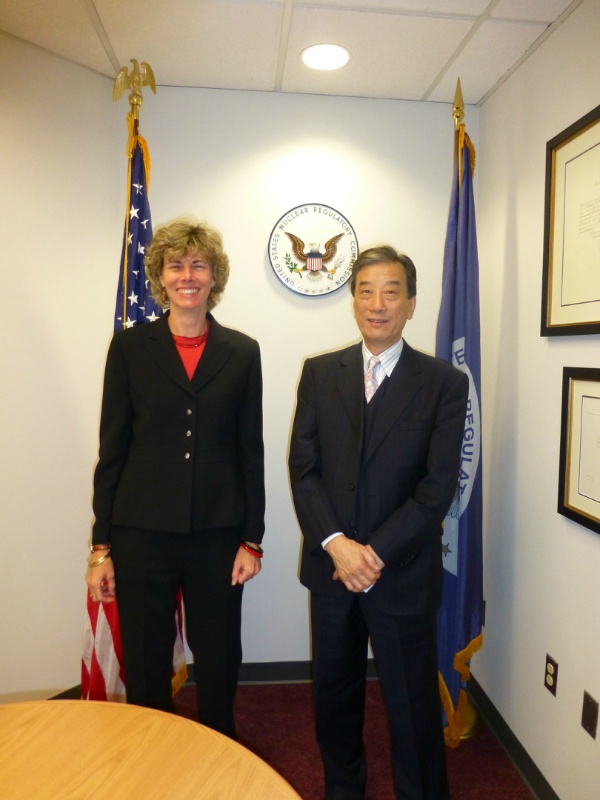
Upon arriving the airport, I went straight to the hotel for 30 minutes or so for check-in, then to the Center for Strategic and International Studies (CSIS).  Here, we went straight to work preparing for the talk the following day and some events which are collaborating over last few years.  Then, I went to see Dr. Richard Meserve of the Carnegie Institute, who gave us many insights at the fifth NAIIC Commission meeting, then National Academy of Sciences to see Dr. Norman Neureiter, chairman of the National Academy of Sciences’ panel on the Fukushima nuclear accident, and Dr. Kevin Crowley, who directed the panel.  Mr. Tsugita of the Japanese Embassy, and Ohama of JST in Washington D, both of whom I have worked with in the past, also attended and were very helpful. In the evening, I was welcomed with a dinner at Mr. Tsugita’s home.

I was very pleased that the complete English version of the NAIIC report was uploaded on the web (eng, jpn) on this day.  This team did an incredible job and the world was waiting for the report.

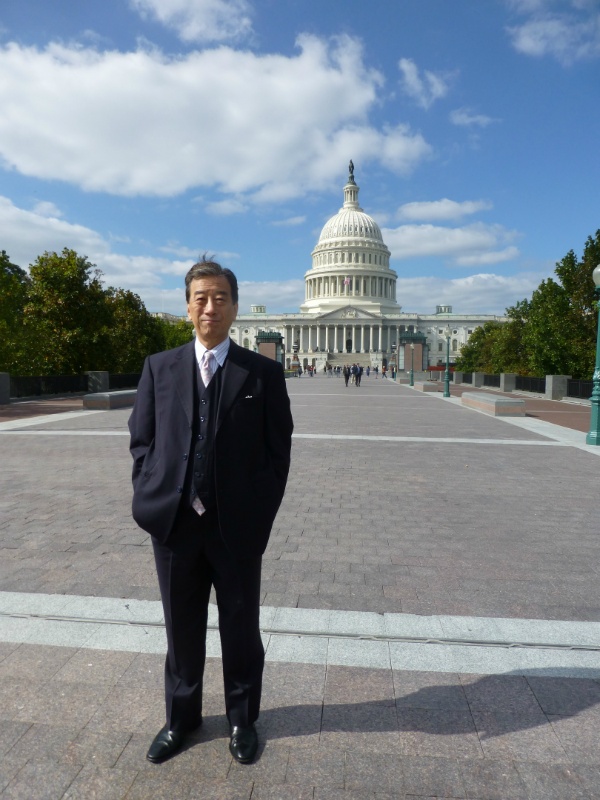
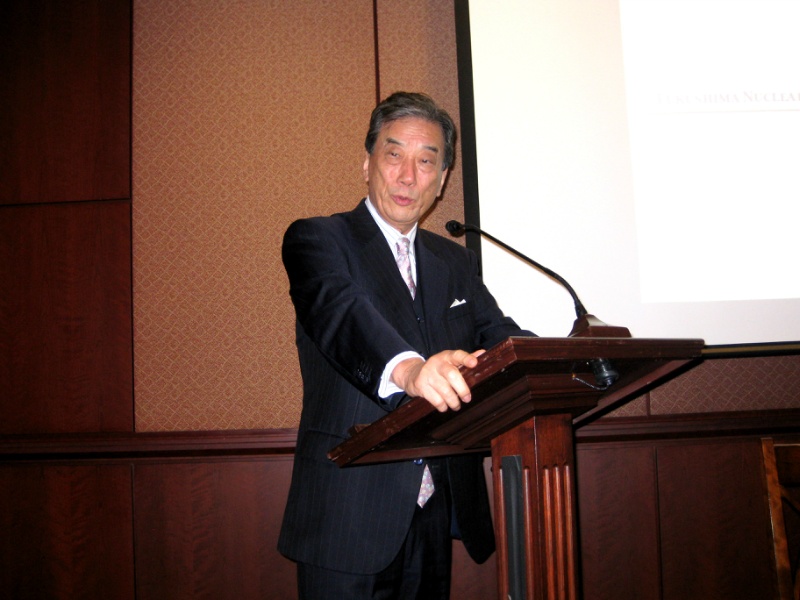
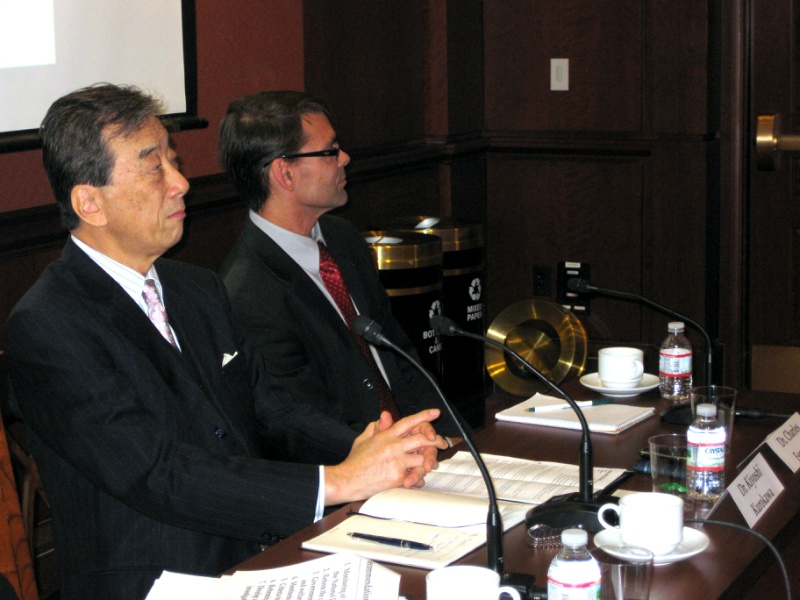
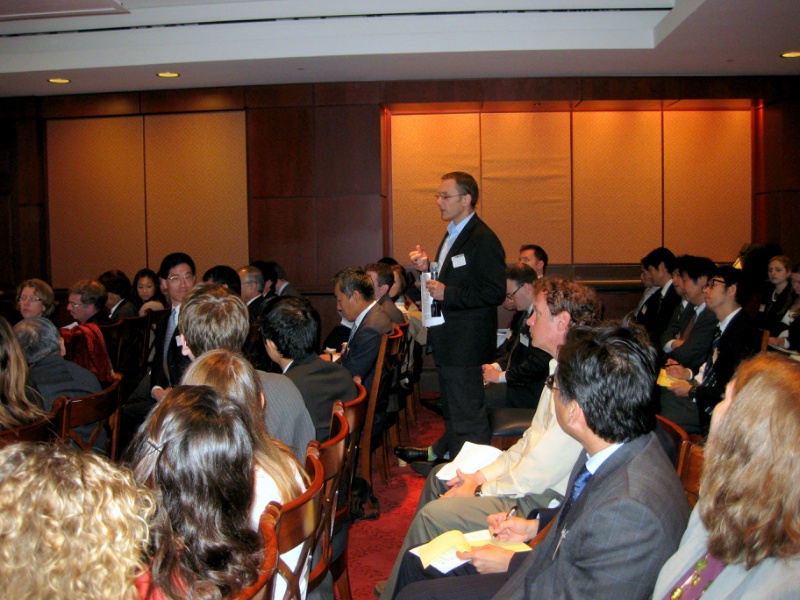
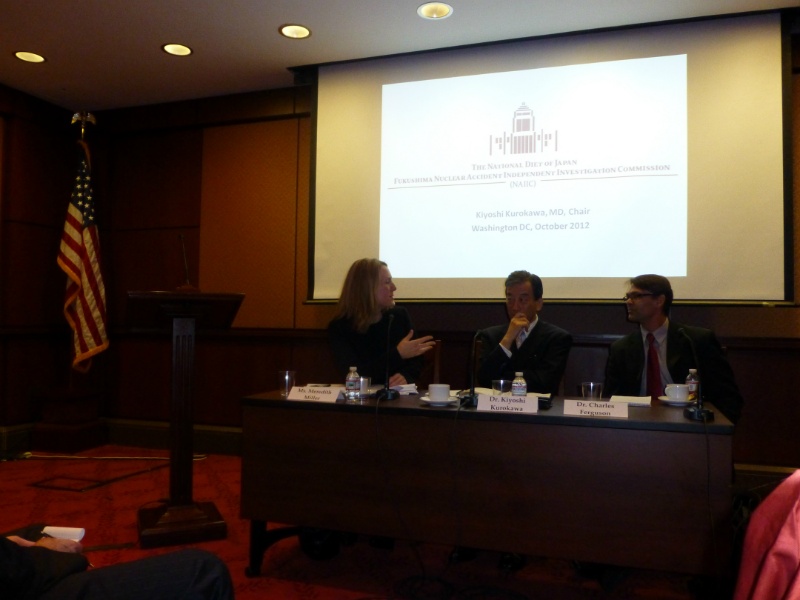
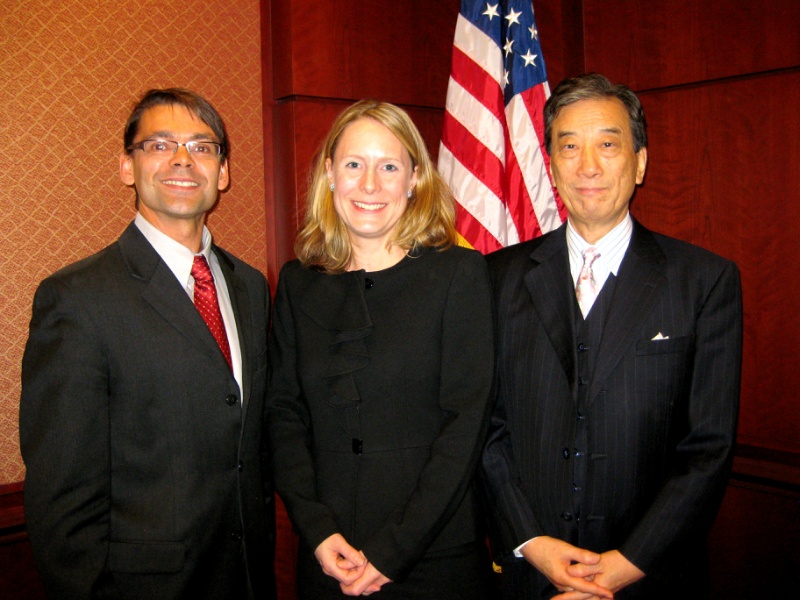
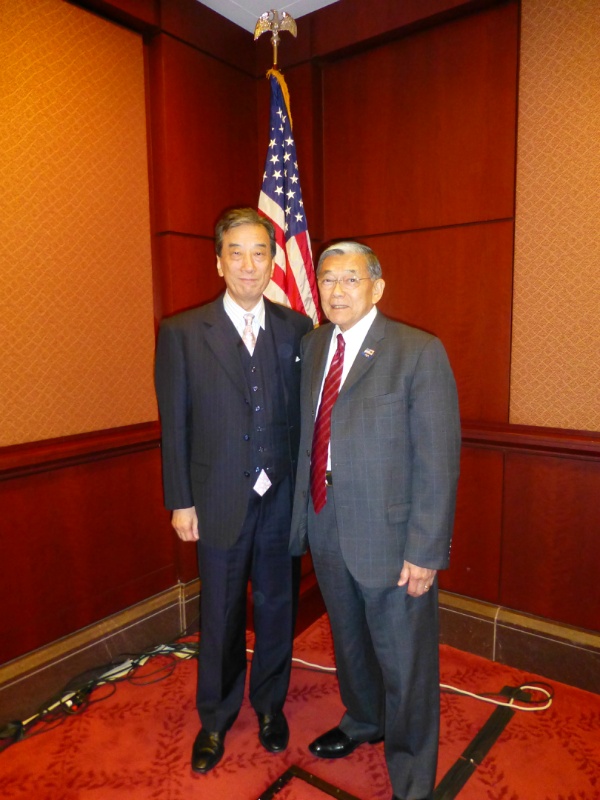
The next morning, I visited the U.S. Capitol (1).  I gave a talk on the NAIIC report , hosted by the US-Japan Council and the National Bureau of Asian Research (NBR) (1).  Honorable Norman Mineta, who served as a United States Secretary under both the Clinton and Bush administrations also attended, and I had the pleasure of meeting with him.  The audience listened closely followed by a lively question and answer session and I believe we received a good response.

In the afternoon, I gave a talk at CSIS on the NAIIC report.  As the venue was slightly small, the room was packed with people and additional seating was made outside the room.  There were around 80-90 people.  This talk (1) was reported on the NHK news in Japan.

I also visited the official residence of Ambassador Fujisaki, whose appointment will come to an end in three weeks.  I would like to take my hat off to Ambassador Fujisaki, who was Ambassador in a turbulent time during which there were many unexpected events.

I spent the evening with young Americans who have experienced living in Japan through the JET Program.  Getting more people to become fond of Japan through such ‘real experiences’ programs is key to building the foundation of good security relations.

It makes me very happy that the awareness of the NAIIC report, along with its background, objectives and purpose, is becoming more widespread both in Japan and abroad.

Next day, I received a ‘thank you’ email from the organizer as below.  I felt good that my engagement was of help in promoting understanding of US and Japan.

Dear Kurokawa-sensei,

It was our great pleasure to host you at the Capitol Hill briefing on Tuesday on the findings of the Diet of Japan’s NAIIC report on Fukushima and a treat to moderate such an interesting and important exchange. We are deeply appreciative of your leadership and willingness to share your views on these findings with the Washington, D.C. policy community. It was a very powerful demonstration of the high standard of transparency that the Commission brought to the proceedings and your personal commitment to preventing future nuclear disasters.

We have received tremendous feedback on the discussion from those who attended and NBR, the U.S.-Japan Council, the Congressional Study Group on Japan, and the Senate Committee on Environment and Public Works were all honored to host you.

Thank you for your many contributions to global policy. We look forward to future opportunities and in the meantime, please let us know if there is anything we can do to support your work.

Best regards,


Why not begin your global career by studying at OIST, it is already part of Global World

→Japanese

I have introduced several times on OIST in this blog posting site.  OIST is now open for graduate students for 2013.  Read the attached brochure, visit its website, think of applying, contact the office, think of visiting OIST.  OIST is completely different from any other graduate university of Japan, beginning of your global career, it is already a leading Graduate University of Global World.

OIST Brochure English (PDF)

********
Call for applications: PhD Program
 
The deadline for applicants living in Japan is December 31, 2012.
 
The deadline for international applicants is November 15, 2012.*

*The earlier international deadline is to allow time for visa processing.

The Okinawa Institute of Science and Technology (OIST) Graduate University is now accepting applications for admission to the PhD program for the September 2013 intake.  We are looking across the globe for students who will flourish in an atmosphere of encouragement for discovery and innovation.  With over half of OIST students and faculty coming from outside Japan, OIST offers the highest level of graduate education while embedded in a truly international environment.  About 50 cutting-edge laboratories conducting research in a range of fields form the hub of the OIST Graduate University.  Based on a firm foundation in the basic sciences, we promote education that is highly interdisciplinary.  The graduate program features interactive teaching with tutorial-style courses providing preparation for thesis research.  Course design is customised to the unique needs of individual students.  From the beginning, students work side by side with world-class faculty and researchers in well-equipped laboratories.

We are currently selecting our next class of graduate students and we would like the opportunities for PhD study at OIST to be as widely known as possible.  Our intake is limited to about 20 students per year, and we aim to recruit excellent students.  All students receive an internationally competitive support package, health insurance, and subsidized on-campus housing.

More information about the program and how to apply on-line is available at:
http://www.oist.jp/graduate-school
 
Students who are interested in applying but have difficulty meeting the deadline should contact us for assistance at:
study@oist.jp

Jeff Wickens
Dean, OIST Graduate School