From San Diego ? Delivering a Keynote Lecture at the First ‘Cell Society Clinical Annual Meeting’

→Japanese

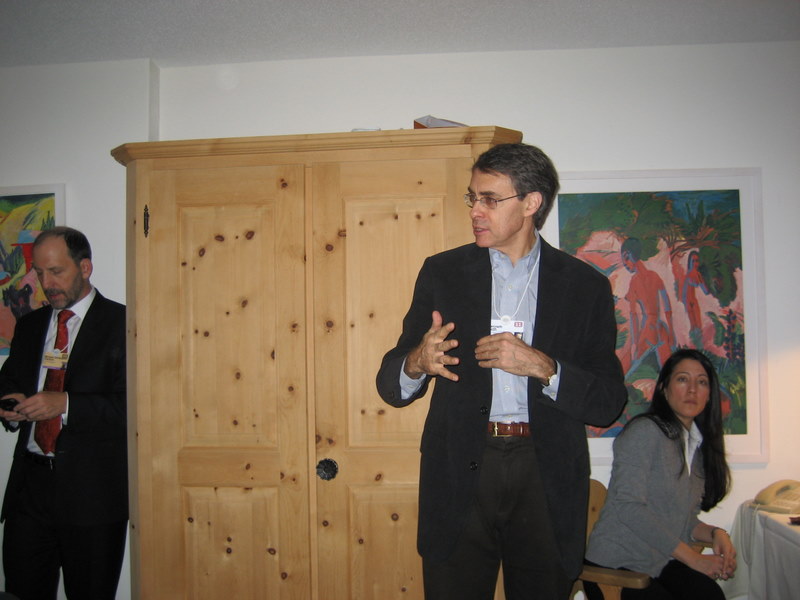
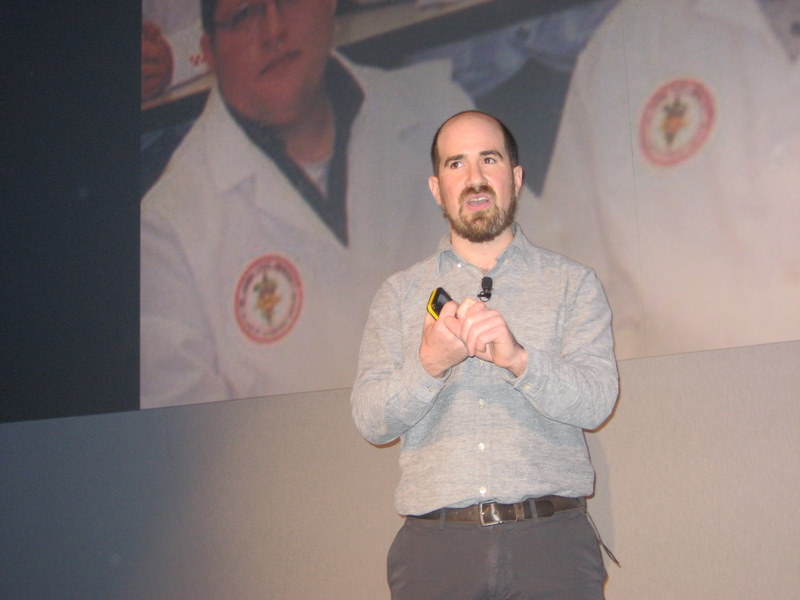
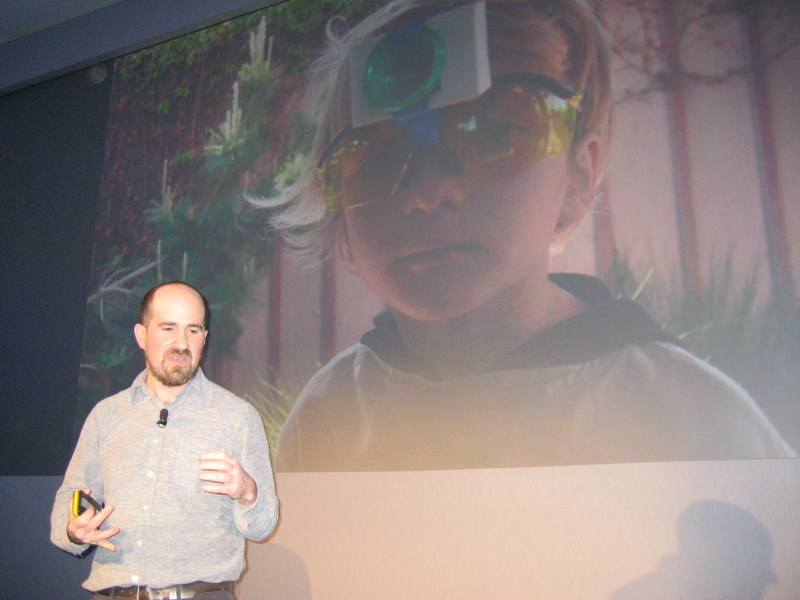
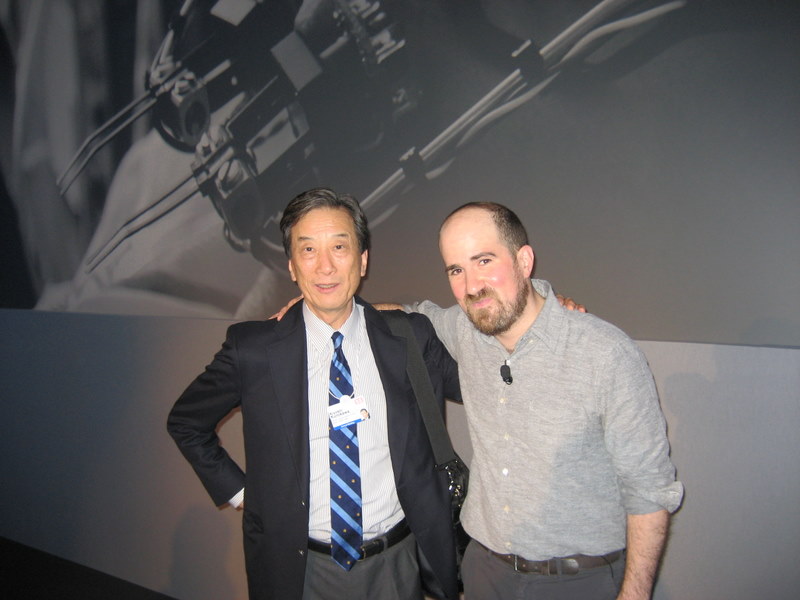
On February 17th, I left Narita for San Diego via San Francisco.  I was to give a keynote lecture at the Cell Society Clinical Annual Meeting.  I checked in at the Estancia Hotel at La Jolla where the meeting was to take place.  It actually was quite a comfortable Hotel.

The weather, however, was not at all like South California; cold, dim, and we even had a rainfall.  This is a rare situation, but it’s no use complaining.  The weather recovered, however, during the afternoon of the second day. 

The objective of this gathering was quite clear; to discuss exclusively on the current status of adult Stem Cell usage in clinical settings.  We didn’t focus much on basic research; rather, on what was happening in each field ? including correspondences with the investigation authorities.  I enjoyed the presentations: many of the presenters are people with whom I rarely have opportunites to see in my regular academic activities. I felt as if I was being introduced to a new frontier

As we learned about various knowledge gained in various fields, we gradually came to see all kinds of possibilities that adult ‘Stem Cells’ have for clinical fields.  I think there is a great potential especially in the field related to orthopedics or cosmetic surgery.  Considering that we are in the aging society, there would be need other than authentic healthcare.

From such broader perspectives, I felt that my keynote lecture was adequate for the occasion.  I said a few words on Watson (Ref.1, 2), too.   (I noticed that Dr. Yoko Ishikura also commented on Watson in her blog).  Many of the participants congratulated me for the speech.  I was very happy to know that they liked it.

Moreover, I strongly felt that in the context of the progress of 20th Century medicine, this meeting, by itself, established a very unique standpoint.  It suggested us the possibility of a totally different perspective and framework of science.  I would like to talk more on this issue at some other occasion.

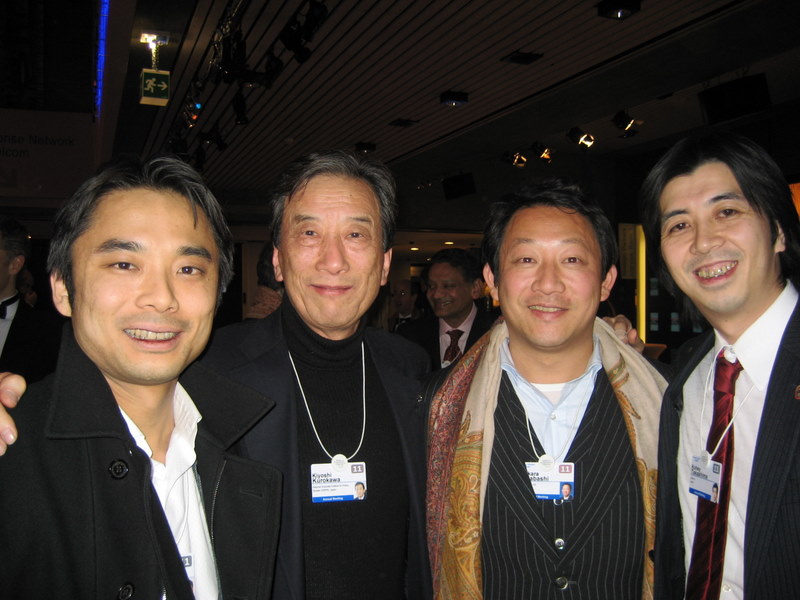
From 9:30pm.  I had some wine with a few Japanese students studying at UCSD and other universities, and also people from CONNECT, at the hotel until very late at night.  Photos are here.  I always enjoy exchanging views with young people from Japan. They are always full of energy.  I want them to become globally active, and am looking forward to seeing that happen.

So, again, I was exposed to more things to think about.
This Year’s Employment and ‘Naitei Torikeshi (Cancellation of Job Offering)’

→Japanese

The status of employment is still very bad in Japan.  I feel sorry for the youth.  Their future is being inhibited.  I think a large number of young people were deprived of opportunities during the past 20 years in Japan.  Why must one need to be a new graduate in order to apply for a job?

Risa Mamiya, a private university student in her junior year, wrote a book ‘Naitei Torikeshi (Cancellation of Job Offer)’ that recounts her experience job-hunting. Her activities turned out to be a battle with the enterprises.  Having read this, I felt it hard to believe, but who would take trouble to make up stories on such matters?  Of course, she writes a blog, too. (in Japanese)  By all means, please take a look.  Unimaginable things do happen in this world.

However, is there any guarantee that the current permanent employment system will continue?  Will there still be severance packages in 30 or 40 years from now?

So, how could you enhance your value in society?  What is the mission of higher education?  Will universities change?  Will enterprises change their ways?

What will the future of Japan be like?  If you look broadly at the current situation of the world, I think you will be able to see many more of things.
 
Just yesterday, I had a meeting with a board member in charge of the Japan and Asia regions at a new company (which was founded 10 years ago in the U.S., but from the start, this company has worked on the premise of going global). This company is now recruiting employees, and the two people they hired recently seemed to be very capable. Had I been a human resource worker, I too would have interviewed them at once.  However, they had failed to get jobs in Japanese companies (of recognition, and I was told that one of the two was declined by all 16 companies which he/she applied to…), so they were introduced to this company for  an interview, and the human resource decided on the spot to take them.  Those two people had a high potential to actively work from the beginning not only in Japan but also in Asia or any other parts of the world.

 I wonder why they failed to get a position at top Japanese companies.  This is the question.  What criteria do human resources in Japanese companies apply in evaluating their applicants? What kind of people are they looking for?

As I have introduced to you before,  Pasona co. launched a program to support new graduates who could not get jobs.  I think this is wonderful.  Such companies will get the support and trust from society.

So, then, what can the youth do?  I think there are many things that can be done or should be done.  Think about it.
One would be going abroad for study/overseas experience…. It’s the ‘Kyugaku no Susume (Recommendation on Taking a Leave of Absence from School)’.
To the G1 Summit

→Japanese

Two days after I returned from Okinawa, I went to the Hoshino Resort Risonare at Kobuchizawa located at the foot of the Yatsugatake and Kaikoma mountains.  My plan was to participate in the G1 Summit  hosted by Mr. Yoshihito Hori and his colleagues.  I saw Mr. Hori on several occasions: in the Davos Meeting conferences; at India, Singapore, Dalian, Tianjin, etc.    He is a young colleague of mine.

It was cold, but the weather was so beautiful that the low temperature did not bother me.  The view was all white.  The participants consisted mainly of young people, and I felt a great energy of desire to move Japan forward.  To my regret, I had work to be done in Tokyo on the first day (in spite of the 11th being a national holiday), but thanks to Twitter, I was able to sense what was happening at the conference. The guests were fantastic; for instance, from the policy and economy sector were Mr. Yoshimi Watanabe, Dr. Heizo Takenaka, Mr. Tetsuro Fukuyama, Hironari, and Mr. Hiroshige Seko. The business sector included people such as President Hasegawa of Takeda Pharmaceutical, Mr. Kazuhiko Toyama, CEO of Industrial Growth Platform Inc., Mr. Yoshimitsu Kobayashi, President and CEO of Mitsubishi Chemical Corp., Mr. Miki Watanabe, the founder of Watami Co., and Mr. Yoshikazu Tanaka, the founder of GREE Inc. 

I arrived at the venue in the afternoon on the 2nd day to host the panel on science and technology policy(in Japanese) with Mr. Kan Suzuki, Senior Vice Minister of MEXT, Dr. Keiji Tachikawa, President of JAXA, and Dr. Shinya Yamanaka of iPS cell.  I claimed that the science technology is dependent on human resource development – whether it is a basic research or a Big Science new sprouts must spring from the seeds.  After witnessing the examples of their seniors, many young talents will spring.  This is the challenge that we must address.  While I admit that it was a great achievement for Japan to produce 10 Nobel laureates in the 21st century, I think we must also think seriously about the fact that 3 of them were residing in the U.S…

The closing program was a dialogue between former Prime Minister Abe, and Ms. Ryoko Sakurai under the title of ‘As Proud Japanese, we ….’.  In the evening, we went to the Suntory Hakushu Distillery and the aroma of whiskey made me feel mildly intoxicated.  We also enjoyed the entertaining talk of Mr. Rome Kanda, a speaker of last year’s TEDxTokyo.

On the next day, I hosted a panel; ‘Is Heavy Social Welfare Compatible With Economic Growth?(in Japanes)’ with Prof. Yoshikazu Kenjyo, Mr. Motohisa Furukawa, and Dr. Yuji Yamamoto.  The discussion somewhat strayed away from the title, I thought.  I also feel a bit responsible for letting each panelist talk too much (they had difficulty keeping the requested time of 5 minutes……).

The closing was gracefully hosted by Mr. Yoshito Hori, with Dr. Ikujiro Nonaka, Dr. Hiroshi Tasaka, and Mr. Seigo Matsuoka. 

It was a nice gathering.  I congratulate and thank Mr. Hori, the organizer, and his staff, as well as all the participants.


Okinawa Institute of Science and Technology; The Graduate School is Opening its Doors to the World

→Japanese

Photos (1, 2)

As I have mentioned to you several times here, the government of Japan is creating a new Graduate School in Okinawa that is open to the world.

The main buildings are gradually emerging, and the scientists are starting to move into their new offices from their temporary spaces that they’ve worked out of since last year. This year, the institution is commencing the procedure to obtain accreditation as a graduate school.  The recruitment of good researchers is under way, too.

As their web site shows, the content of this institution is truly global.  Of course, it is still far from perfect, and there are a number of issues to be solved (such as things related to the International School, or recruitment of students, etc.), but the bottom line is that this organization, from its inception, opens its doors to the world.  Because of this, I expect a lot.
 
Dr. Sydney Brenner is the first President of this Institute, and Dr. Jonathan Dorfan is the President elect of the Graduate School.  The list of board members is impressive, too, and I feel it a privilege to work with them. 

After the luncheon at the ACCJ I left Tokyo for Okinawa to attend the OIST board meeting.  We had a good discussion on many issues.  You can see the content and photos here.

It is important to create a new university or a graduate school that is open to the world at its foundation .  Although we talk about change, it is extremely difficult to take real action toward those changes.  We have too many people who come up with reasons for not doing something… I think it is the same in any university.  Japan is full of NATOs (“No Action Talk Only”s).   Universities in Japan are too far behind from the  global mainstream (in Japanese) (Ref.1 in English).  I urge people to act before complaining about the university ‘Rankings’.

To youth, I urge you to go abroad.  And I ask all of you to support such inspiring youth (Ref.1).

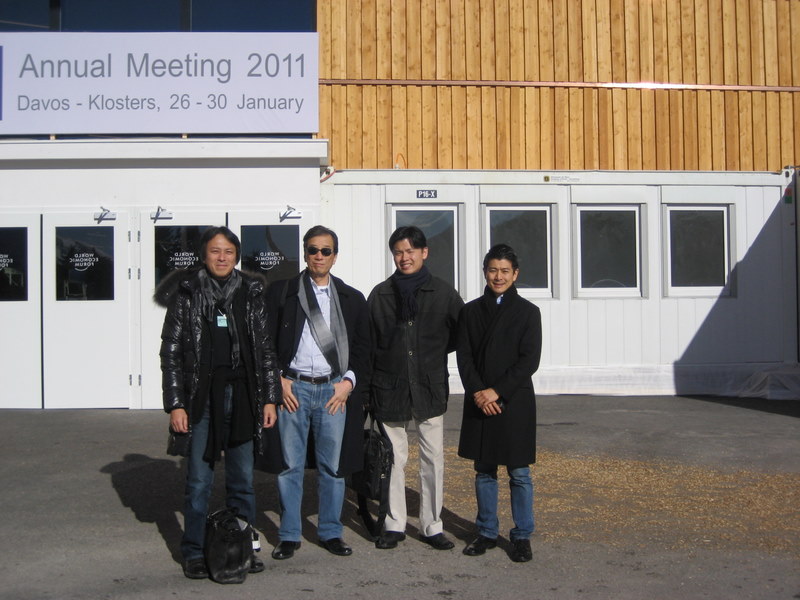
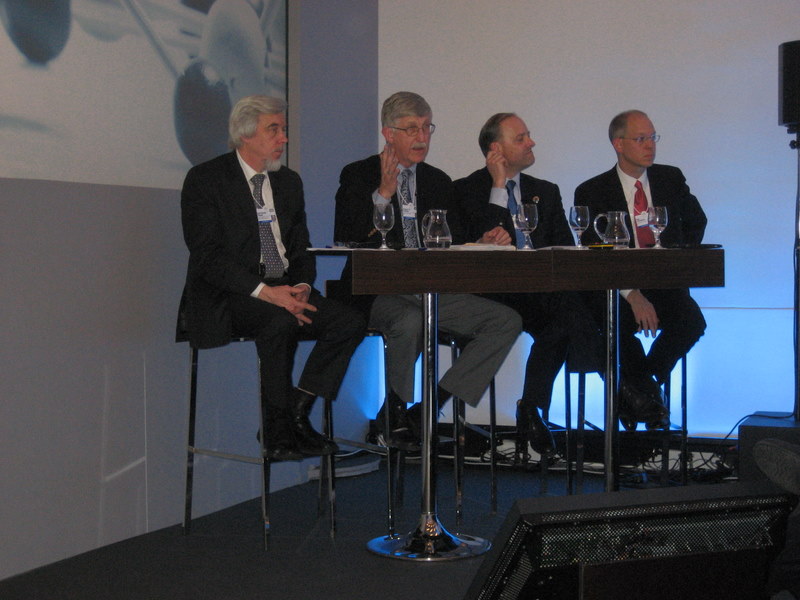
From Davos -4

→Japanese

Today is the last day of this year’s Davos meeting.  Throughout the meeting I have been exposed to many thought provoking things/issues.

One of them is the power shift taking place in the internet age, as observed in the drastic political change in Tunisia and Egypt.  The effects of WikiLeaks is similar in nature to these shifts.

On the other hand, the world economy’s prospect is still unclear.  Mr. David Cameron delivered a wonderful speech as the leader of his nation.  Mr. Cameron and his administration are rapidly carrying out many bold policies in this difficult time.  I think their task is very difficult.  People will criticize them in many ways, naturally, but in today’s circumstances, true leadership is being sought more than ever before.
 
President Obama also delivered his State of the Union address in Washington DC.  A poll right after the speech showed that 55% of the people supported Obama.  This is a good rate.  There is no one policy that will satisfy all people.  It’s best to learn from history, see the trends, equip oneself with intelligence and courage to do what has to be done so that we may adapt to the change taking place in this totally new global world.  Leaders are expected to do all this and set clear priorities, to talk to people of the nation and of the world so that they can understand what to do ? a leaders’ ability to do all this is being tested.  Such is the world we are in today.

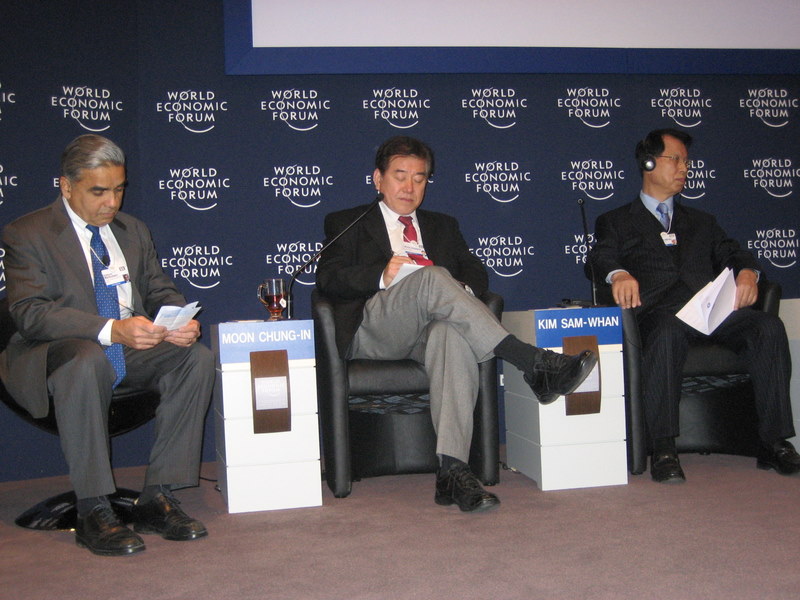
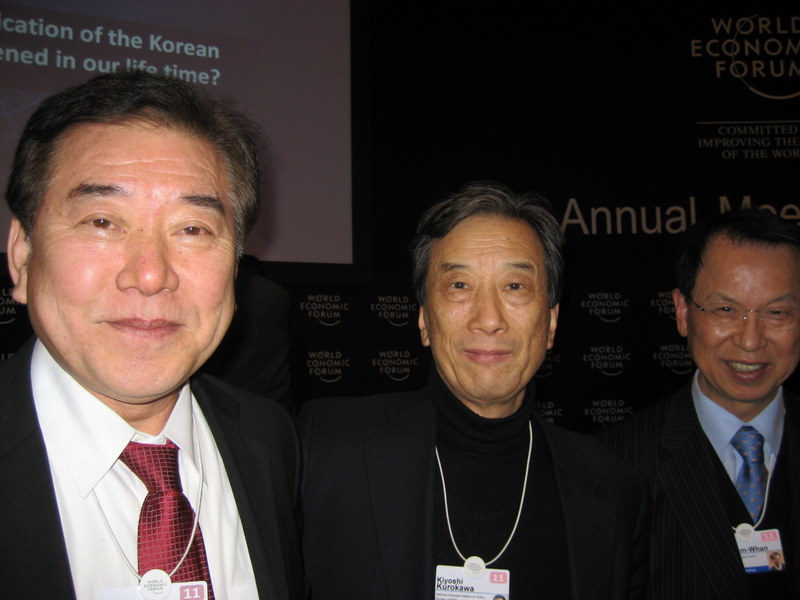
The panel of ‘WHAT IF: there is reunification on the Korean Peninsula? ’was also very thought provoking.

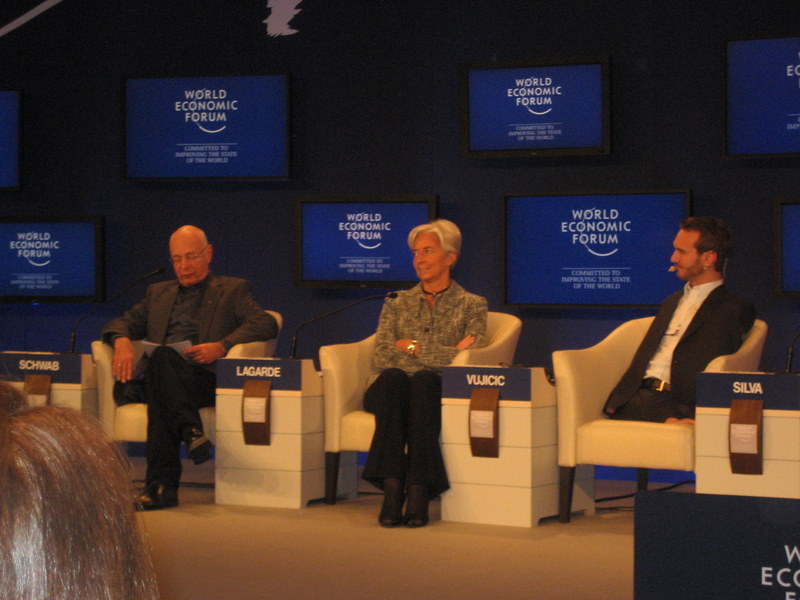
The last session of this year’s Davos meeting, ‘Inspired for a Lifetime’, is on-line in video and summary, too.
 
Overall, the Japanese media, I regret to say, seemed as if they did not exist at all.  The list of media coverage is uploaded on the front page of the Davos meeting, and even the Huffington Post is in the list! The Japanese media were not listed once.  Isn’t there any Japanese journalist or journalism that would speak/write not only to Japan but to the world?  Are we not the nation of the 3rd largest economy?  I did see several (but not many…) Japanese reporters in Davos. It  seemed to me however, that even there Japanese reporters were sometimes trapped in ‘traditions’ such as the ‘kisha-club (reporter’s club)’ which is so powerful back at home.  However, I saw some good signs in the phenomenon of participants being active in twitter.  I like it.

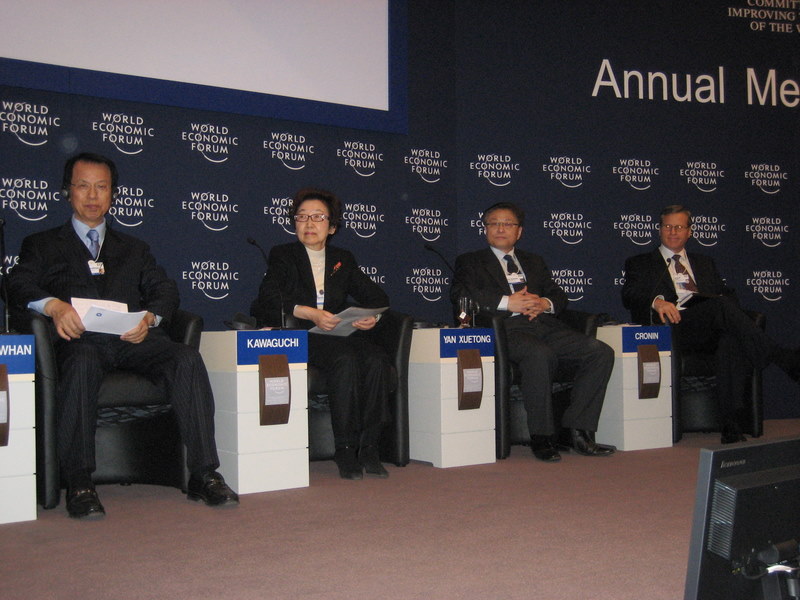
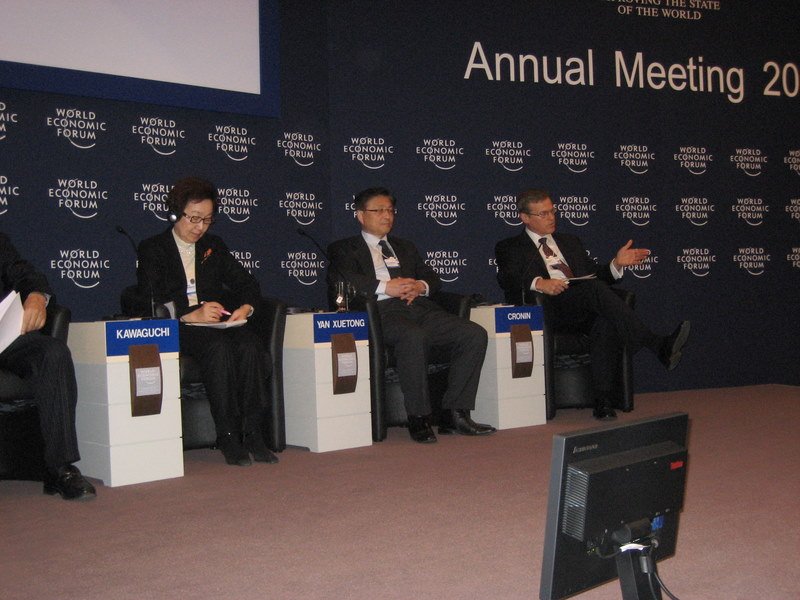
This year, luckily, I had the privilege of traveling with Ms. Junko Kawaguchi, the former Minister of Foreign Affairs to and from Zurich-Davos.  Thank you!

I will be back at home on the 31st.  I wonder how politics, the economy and everything else in Japan will look to my eyes after having been exposed to so much here?

From Davos -3

→Japanese


What’s happening in Davos is reported on its web site   (for videos, see here).  Take a look and enjoy!

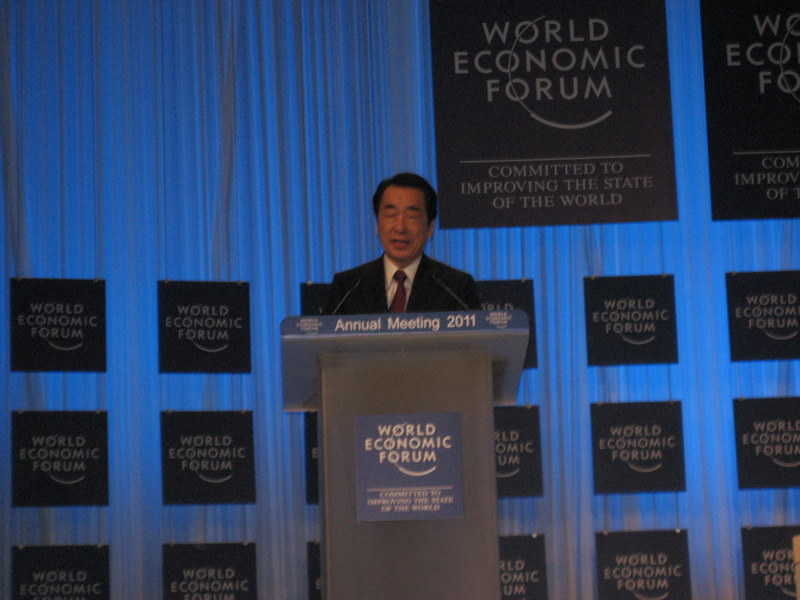
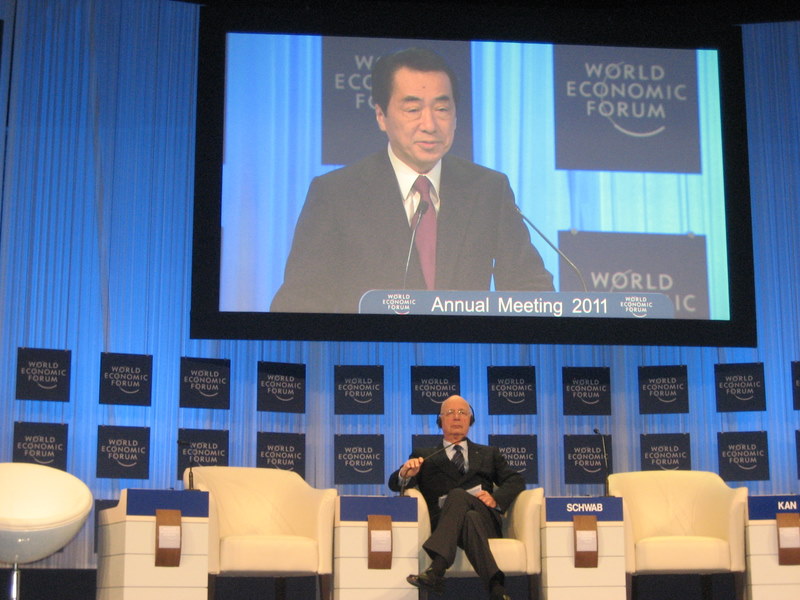
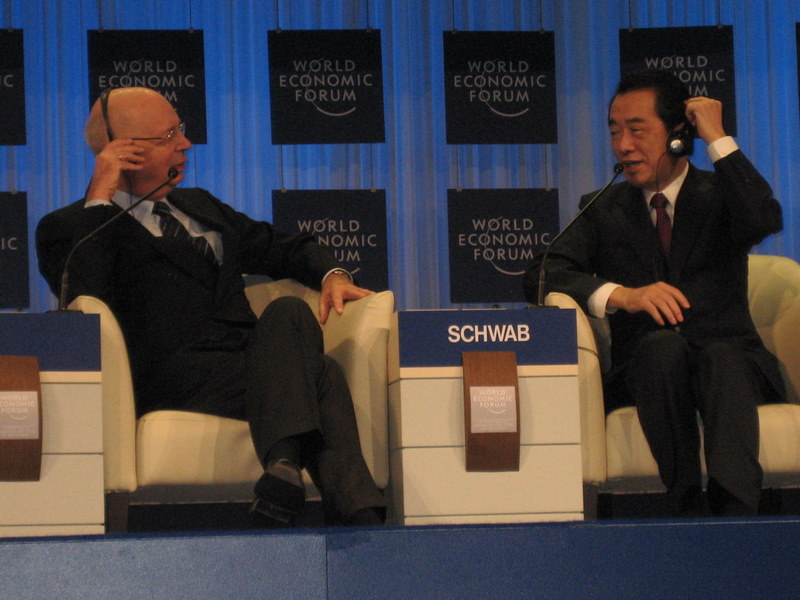
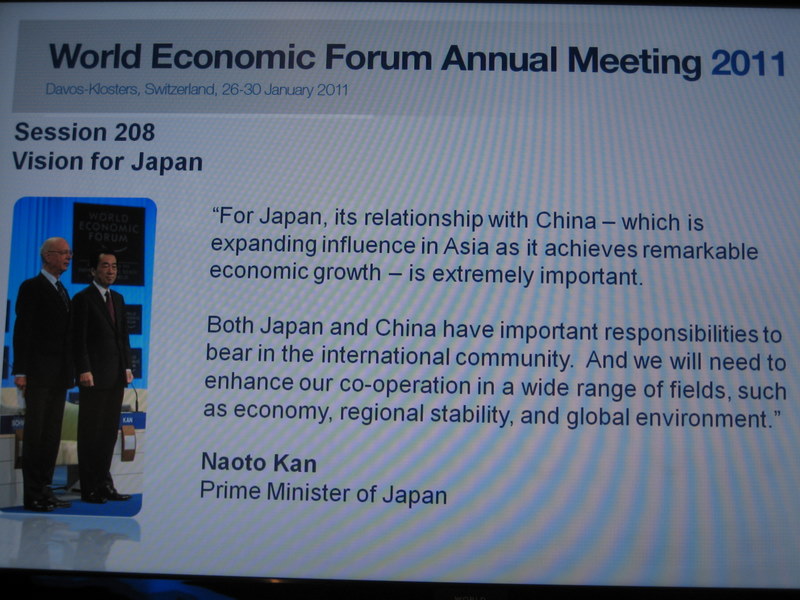
Today, the Prime Minister Kan will deliver a speech at 11am.  I imagine staff are busy in preparation.

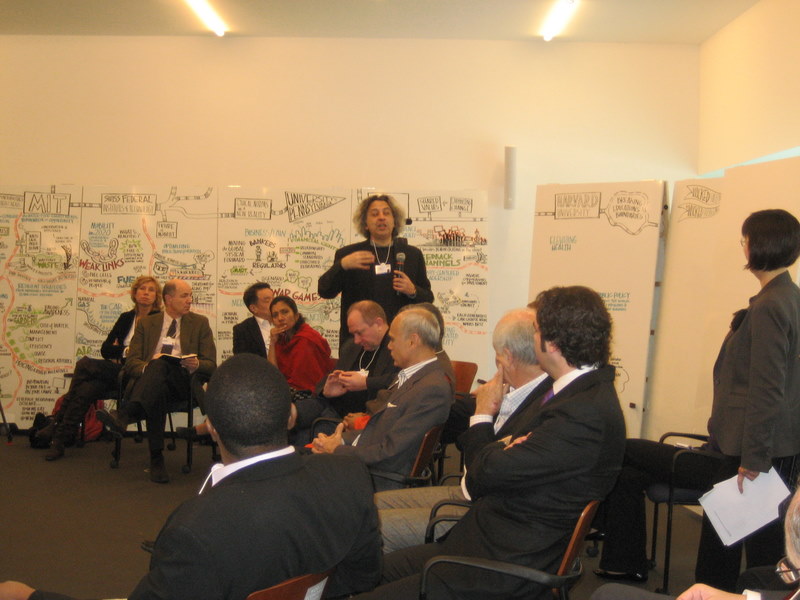
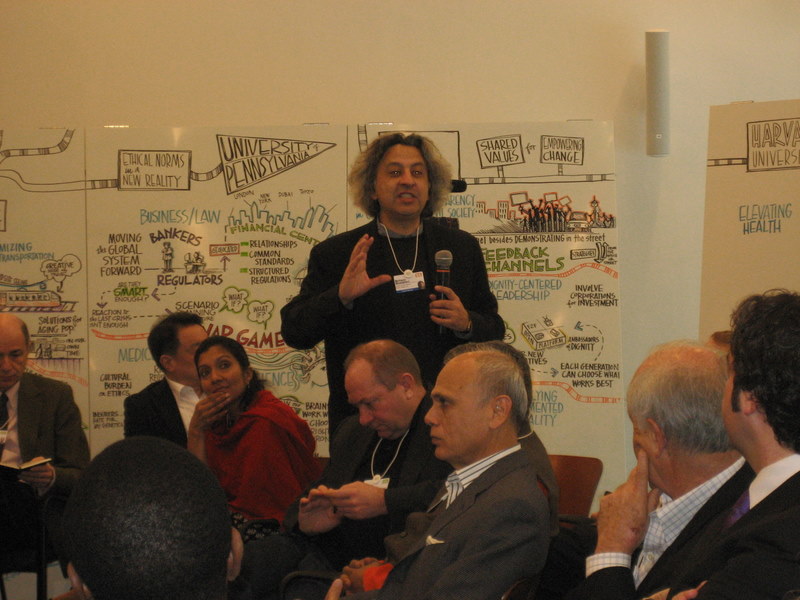
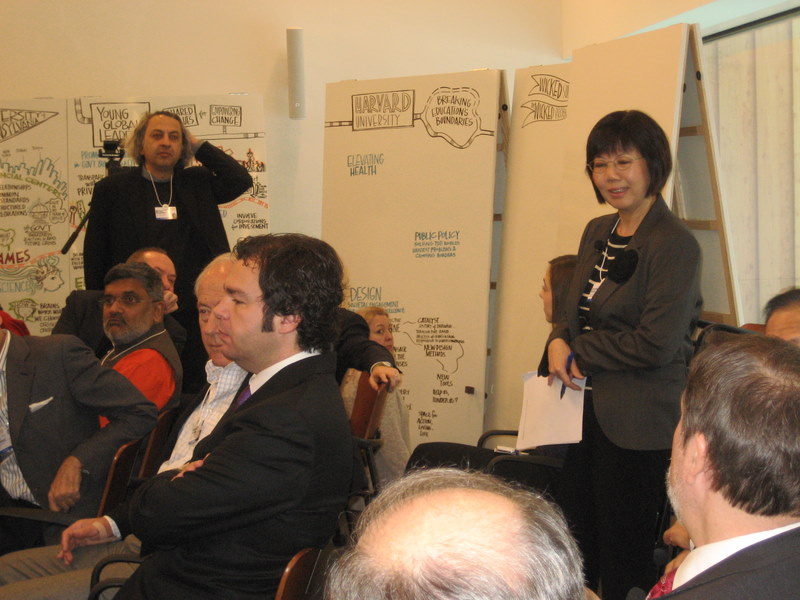
I started the day with the ‘IdeasLab’ of Harvard University. The speakers were Dr David Ellwood of the Kennedy School, Dr Mohsen Mostafavi of the Graduate School of Design, two Deans (the Business School Dean, Dr Nohria was unable to make it), Dr David Bloom, GAC’s Ageing Council Chair, and it was hosted by Annie Koh of Singapore Management University.  The theme was ‘Breaking Education’s Boundaries’.  It was a very exciting session.  I enjoyed making comments, too.

The speech of the PM Kan started at 11:30.  However, much of the audience left the venue before the speech since the panel before was ‘The Global Economic Outlook’ hosted by Martin Wolf  of the Financial Times. But who can complain?

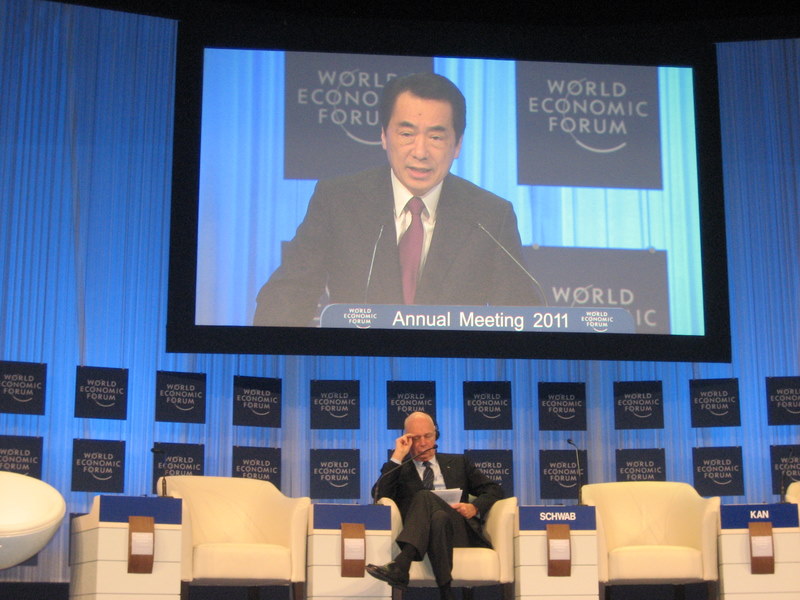
I thought that the prime minister’s speech was quite good. Starting with the recent disturbance of Egypt, he spoke well, and the way he handled the Q&As was also good.  You can view this On-line (both in English and Japanese ). Now, the question is, when, how, and to what extent can the Kan administration carry out their plans as described in the speech.  It’s time that the strategies and decisions of the government be tested.

On the other hand, I see quite a few problems on how PM Kan’s speech was reported in Japanese media.  I urge you to read and compare how the newspapers reported it.  Today, unlike the old days, you are able to see and listen directly to the original speech.  This is the power of the internet.  How do you evaluate the speech of Mr. Kan or the quality of the reports by the Japanese media?

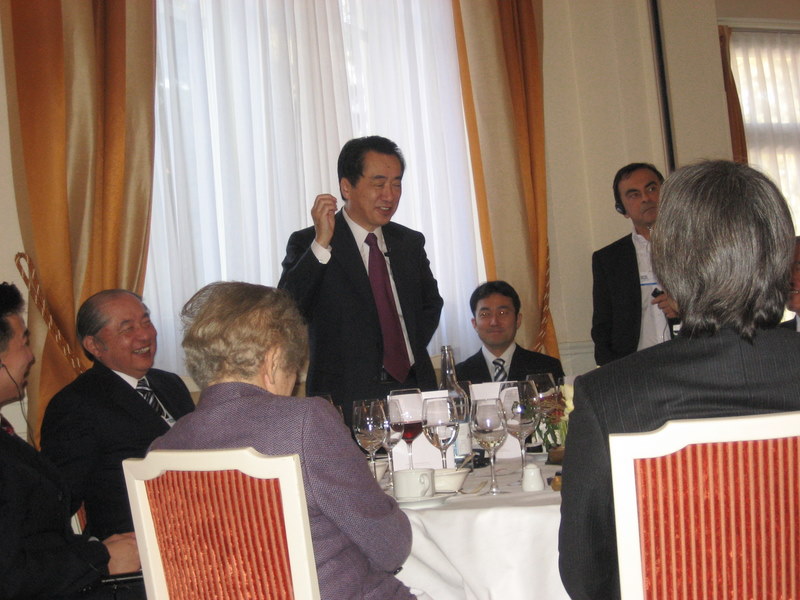
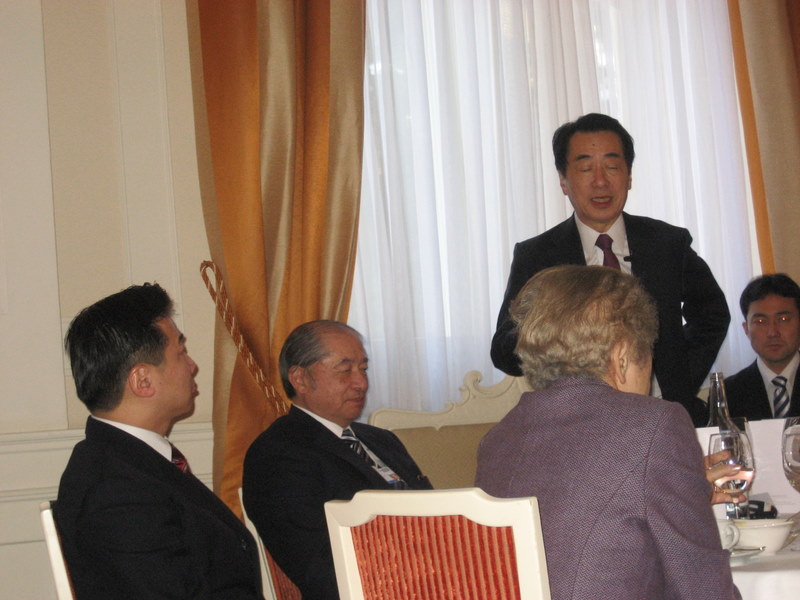
Immediately after the speech, a lunch meeting was held with Mr. Kan, and hosted by Mr. Carlos Ghosn.  I think Mr. Ghosn managed the Q&A’s well, too.

After lunch, there was a panel titled ‘Re-inventing Japan’ (everybody knows that there have been many panels with similar titles and yet nothing has changed…).  The Prime Minister opened the event with his message, followed by Minister Kaieda, Dr. Sadako Ogata, Mr. Kojima, Chairman of the Mitsubishi Corporation, Mr. Charles Lake of Aflac.  The host was Mr. Kristof, former head of the NY Times Japan office.  Since Mr. Kristof was well aware of the problems in Japanese media (such as the one about ‘Kisha club’, the reporters’ club), it seemed there was incompatibility amongst some of the comments in the beginning.  Of course we know Mr. Kristof is not responsible for this…..

I enjoyed participating in several sessions, listening to many new ideas, meeting wonderful people, having lively conversation, and making new friends in new fields.  You never know what happens in the future.  I saw many interesting new developments in the fields such as Design, Arts and technology, the Scientific frontier, etc. in the effort to address global issues.

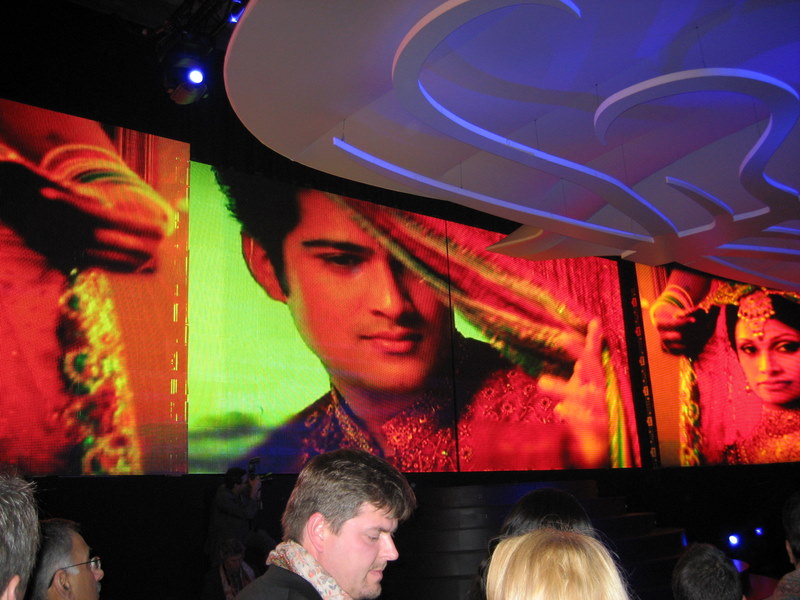
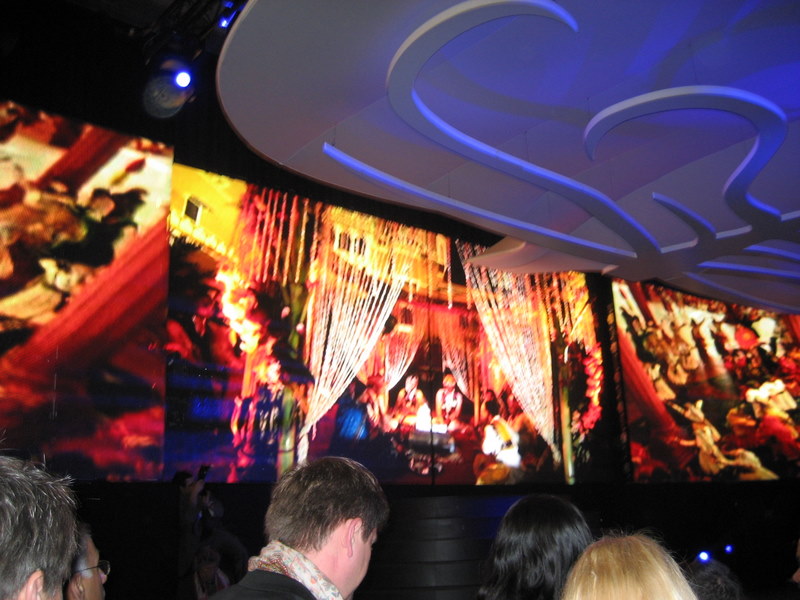
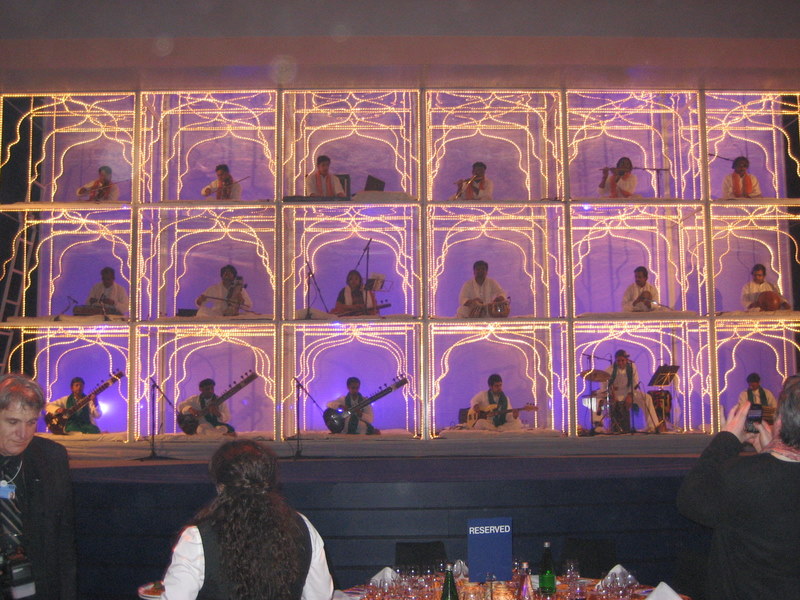
The evening soiree, ‘Inclusive India!’, presented a show full of actions. The venue was packed with people, so I left rather early.

At any rate, in this Davos meeting, I noticed gaps existing between the roles played by government and industry in their handling of international finance and other issues.  Things appear to be calming down at this moment, but in reality, there is a high possibility that some big change could actually occur within several years’ time.  The notion of this was not spoken openly, but at a level of very private conversation.  I had this sort of conversation with a very famous economic journalist who told me there was a concern that EU may be like Japan, like it was for these 20 years.

Today, there exists a number of situations that could trigger crisis on global scale.  Tunisia and Egypt may be just the beginnings.


From Davos -2

→Japanese


The 2nd day in Davos was another beautiful day.  I attended the Japan breakfast meeting of GAC (Global Agenda Council).  About 20 people were there including the YGL (Young Global Leaders), and since all were Japanese, our discussion was naturally in Japanese. I was the chairman of this breakfast session, and so seeing that some people were new to the Davos meeting, I first talked in English and pointed out that this Council was the only council in which the participants all spoke Japanese (the majority were Japanese and the rest were American who live in Japan).  Perhaps I surprised them.  But afterwards, I was told how they liked my comments because it served as an ice breaker.  Of course, the main topic at this session was the visit of the Prime Minister on the 29th.

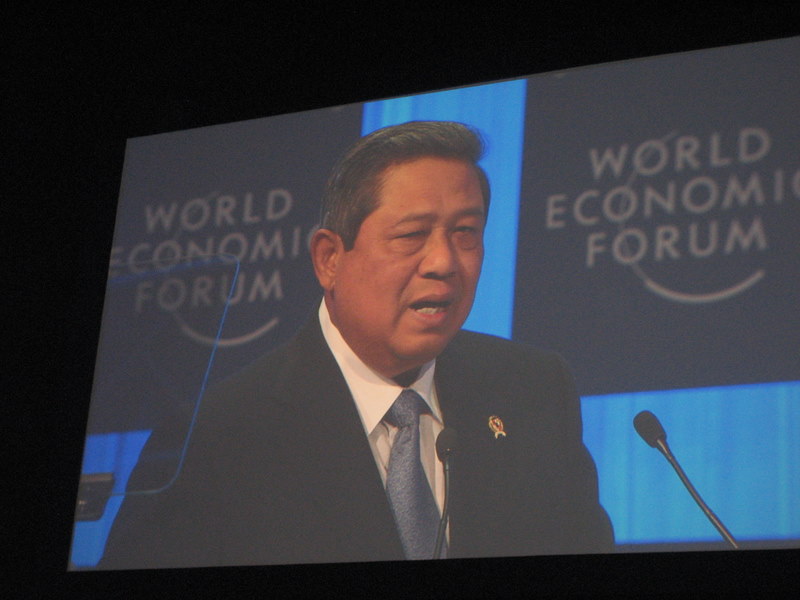
In the afternoon, after several sessions, I went to hear the speeches given by President Yudhoyono of Indonesia and President Sarkozy of France.  Recently, Indonesia is experiencing an 8% economic growth under a democratically elected administration.  The current president and his administration are promoting the decentralization of the government, appointing talents in drastic style.  The ASEAN host of this year, President Yudhoyono delivered a wonderful speech.    Great speeches by great leaders always moves our heart.

I participate in the Governors meeting of big chemical industries annually as a guest and this year it was held in the afternoon.  The discussion is always good here, and it was again stimulating with participants like Mr. Kobayashi of Mitsubishi Chemicals, Mr. Ohyagi of Teijin.  I had the honor of making comments on Shale Oil, ‘Global to Local’ and such.  I learned a lot from talking with the top executives of these industries.
 
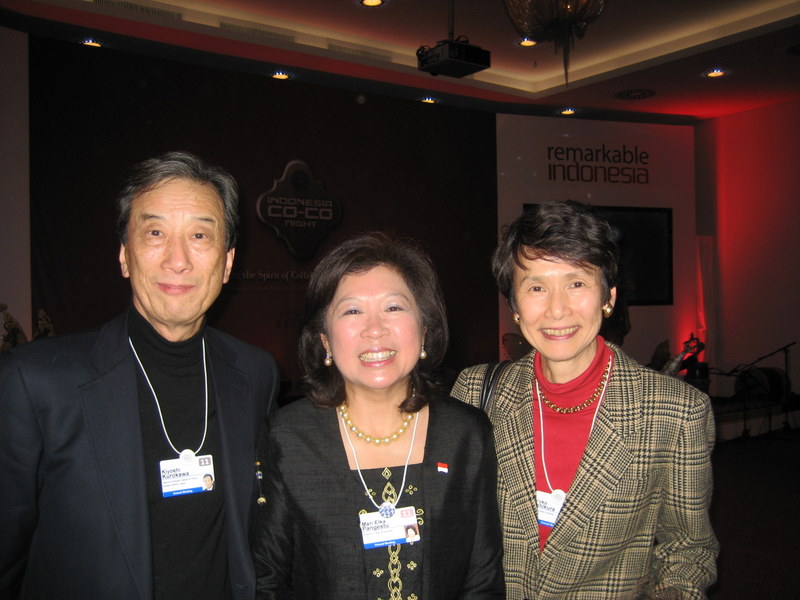
In the evening, I browsed through the Japan Night, Korea Night, and Indonesia Night.  The Indonesia Night had the best venue, but to my disappointment, there were not many people present, since it was after 10pm. Japan Night had the largest number of participants.  This was good.

However, I understand that the news of the  S&P reducing Japan’s ratings from AA to AA- caused some stir in Japan.  I commented on this topic a year ago in my blog.  Japanese media did not cover the news much when the S&P declined last time, but I wonder how they will behave this time.  I noticed a short comment by the PM being reported…

I went to bed feeling it difficult to fall asleep.

From Davos -1

→Japanese


On the morning of the 25th I departed Narita for Zurich via Frankfurt, arriving at Davos late at night.

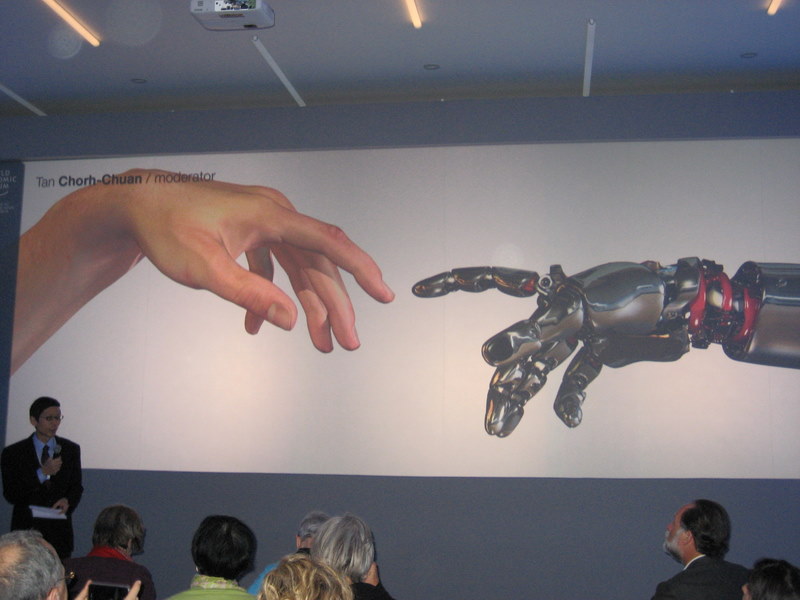
On the 26th, I participated in the early morning sessions. The IdeasLab is always interesting and thought-provocative, so I participated in the session of ‘Design for the New Reality’.  Here, Dr. Yoko Ishikura, Dr. Kohei Nishiyama (he was the discussion leader of the ‘Product Design’ panel), and Professor Toshiko Mori of Harvard University (at ‘Scarcity-driven design’) were the participants from Japan.  As for myself, I joined the discussion with Adam Bly because it seemed interesting and I have had discussions with him on ‘Innovation’ for several years at GAC. Dr. Bly is apparently developing quite an interesting new domain.  It is both stimulating and enjoyable to join in a panel based on presentations with higher perspectives.

Please visit Dr. Ishikura’s blog also.

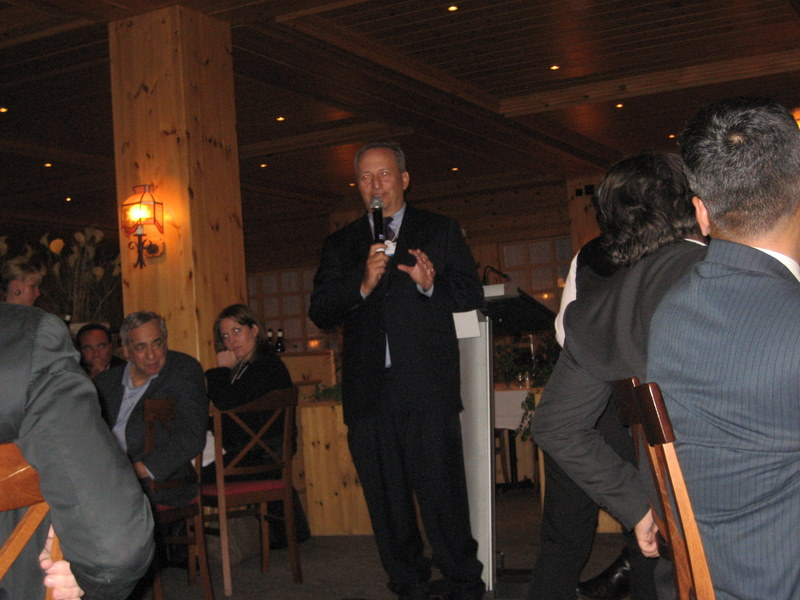
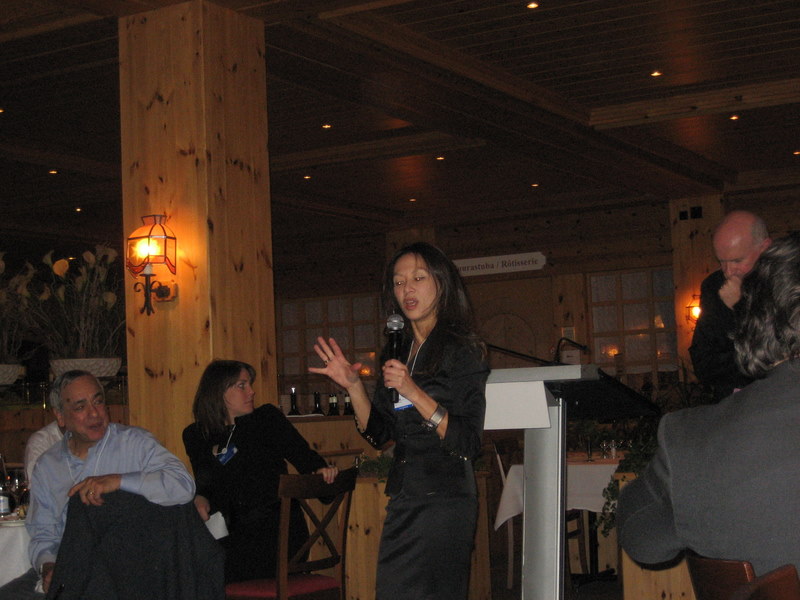
I participated in several sessions, as well as the closing event of the day, the GAC dinner.  The majority of the people had participated in recent Dubai meeting so we had good conversation.  Lawrence Summers and Amy Chua were the two super special guests.  Please refer to Wikipedia for their backgrounds.  I assume you all know Mr. Lawrence Summers.  He is currently a professor at Yale University.  Ms. Amy Chua published a book early this year that has become a trendy, if not controversial topic.  These two guests made our discussion so interesting.  It was a privilege to be able to exchange a few words personally with Ms. Chua after the dinner.
 
The title of her book is: ‘Battle Hymn of the Tiger Mother’.  She writes about raising her two daughters as a Chinese mother. Her opinions and actions triggered quite a discussion among her readers.

Ms. Chua writes about the rules that children are ‘not supposed to, not allowed to’ do.
? attend a sleepover
? have a playdate
? be in a school play
? complain about not being in a school play
? watch TV or play computer games
? choose their own extracurricular activities
? get any grade less than an A
? not be the No. 1 student in every subject except gym and drama
? play any instrument other than the piano or violin
? not play the piano or violin
There are more important rules.  I haven’t read the book yet, but she said, ‘In a sense, it’s like a Jewish mother of 20 years ago’.  She is quite a personality.

No wonder people have a lot to say about her rules.

?

Vabel Conference, Mr. Kim, a Pari Pari Worker

→Japanese

Sunday afternoon, the Vabel Conference was held at GRIPS. The organizer was Mr. Kim, an energetic young man whom I wrote about in my recent blog posting. 

The audience was mostly students.  The speakers, Mr. Nanjo, Dr. Ishikura, Ms. Hayashi, Dr. Saito, myself, and Dr. Mogi were all experienced speakers.  Since most of the participants were young, everything they talked was full of energy and very moving.  Dr. Yoko Ishikura explains this in detail in her blog, so please take a look.

Presentations and Q&As – everything was in English.  Somebody wrote on twitter:(#vabel ) ‘I felt it strange at first that they spoke English in spite of almost all of the participants being Japanese, but eventually I got used to it.’  Yes, getting used to it, and acquiring the right atmosphere is important.

There were some twists and turns, some mishaps, as Mr. Kim was creating this idea and working on it all by himself.  However, at any rate, we all did it.  Ustream, however, did not work properly as I anticipated, which was a pity.  Since I belong to GRIPS, I was helping him as the host to develop programs, coordinate with the speakers, give advice, and arrange for the venue.  So it was a great relief to me that all the guests and audience seemed to enjoy the conference.

I would like to thank several staff members at GRIPS for their great support in making this conference a success. It was a very lively afternoon.

Regardning the word Pari Pari:  it’s meaning is explained in this article.  Enjoy!

A Debate on Education at The 2nd anniversary of The Commons 30 Fund Created by Mr. Shibusawa and His Friends

→Japanese

Late in the afternoon, on January 19th, after giving a lecture at my Keio SFC course (which I intend to write about later), I joined a panel (in Japanese) at the 2nd anniversary of the Commons 30 Fund (in Japanese) founded by my friend, Mr. Ken Shibusawa.

The panel was hosted by Mr. Shibusawa and I was supposed to have a dialogue with Mr. Kenichi Fukuhara, the CFO of Benesse and the head office manager of Corporate Communication (I knew this much beforehand….)   Then, I discovered that the theme was education.  Just the right topic for me!

Mr. Fukuhara showed slides titled ‘Escape from Galapagos Island’.  His intention was to deliver a strong message that Japanese education was also changing to a Galapagos.  Quite shocking!  Then, the topic shifted to ‘the insular mindset of Japanese youth’, which is popular these days.

Given his message, I responded by saying ‘it is not the youth which has problems, but the generation of their parents, and the older’ (Ref.1, 2) (Ref.3, 4 in Japanese). 

I have been focusing on this message for 1-2 months.

This provoking panel is uploaded on UStream.  I feel a bit embarrassed to show this to you, but the future of the youth comes first.

The key, always, is to see the essence within the big picture.

P.S.  I already found some blogs (Ref.1,2 all sites are in Japanese) reporting on this event.  、 、Their comments made me happy.