Congratulations! Shigeru Ban is Awarded the Pritzker Architecture Prize

→Japanese

Shigeru Ban. An architect known all over the world, he has also demonstrated his compassion and philanthropy by helping create cost-effective temporary housing and great buildings for disaster affected regions. He is indeed, a great man.

Congratulations on being awarded the Pritzker Architecture Prize.

I am privileged to have a friendship with Mr. Ban that goes back almost a decade, not to mention that we are both alumni of Seikei Gakuen (in Japanese). In addition, he is the architect behind the critically acclaimed design of the library at Seikei Gakuen (in Japanese).

I met him for the first time in 2012 at the World Economic Forum in New York City. I remember because of the location. Although the WEF is always held in Davos, 2012 was the only time that another city was hosting the event, in commemoration of the tragedy of the September 11th attacks. This was also where I attended a memorable session where leaders of both academic and science community and religious grops came together over lunch and had a very interesting discussion.

Mr. Ban has also appeared on TEDxTokyo in 2013. He manages to convey the essence of what he does in this presentation, and it is worth a watch.

I remember one time, when I tried to arrange a meeting several months in advance, and I asked him about his availability. I was startled by his reply, which was that ‘I don’t plan more than a month in advance. Who knows what kinds of tragic events might happen thusu where I might be’.

Leading groups of young people, he has travelled all over the world, quickly to regions affected by disaster, like L’Aquila, Christchurch, Haiti and Tohoku. There, he has helped in the rebuilding process by creating functional and beautiful buildings out of paper.

But one of the most awe-inspiring creations of Mr Ban to me was the ‘Nomadic Museum’ (in Japanese), not to mention the ‘Ashes and Snow’ collection within it. Another building of note is the NG Hayek Center in Ginza, Tokyo, which also houses the flagship store of Swatch. A unique project, it is elegant and refined, making it a joy to visit.

I am very pleased and happy to be able to appreciate the work of Shigeru Ban, truly a worldwide presence.
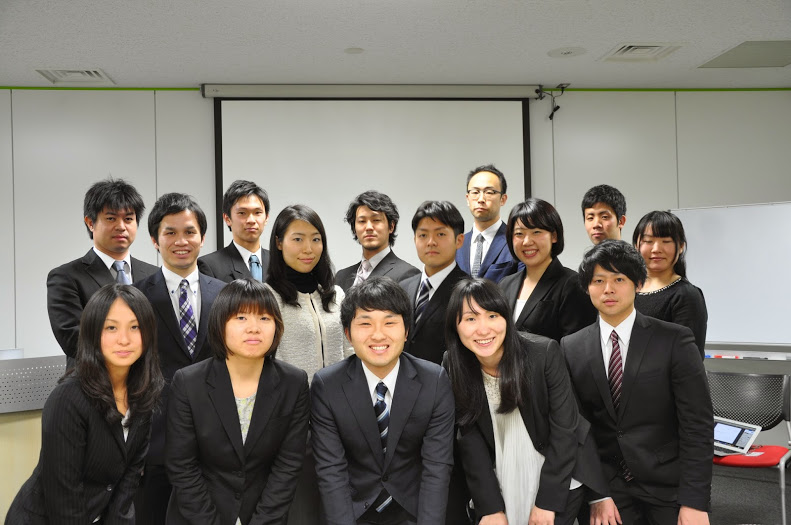
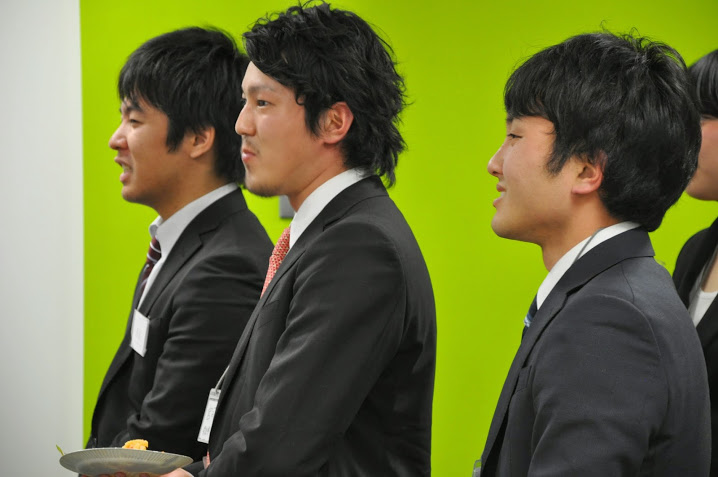
A New Academic Year Brings New Leaders at ‘Teach For Japan’

→Japanese


Teach For Japan (in Japanese) is a program that allows highly motivated young individuals to teach and help students who are from less privileged social community. And through this groundbreaking program, these young teachers are able to impact society in a new way, to nurture young individuals and develop themselves into new leaders. Indeed, this program is able to accomplish so much from those who have gone through. Indeed, graduates fresh out of Ivy League colleges like Harvard and Yale are increasingly making the U.S version of this program their top choice.

Don’t you think that this is great? Mr. Yusuke Matsuda has been working hard to bring this program to Japan, as I have introduced here in my blog a number of times (1, 2).

In the face of problems and adversity over last years, an unexpected 15 students fresh out of graduate school or undergraduate programs, as well as people who previously had ordinary jobs, started working as members of TFJ in places like Tokyo, Nara, and Osaka. They would be teaching at elementary and junior high level schools in localities where there is a need to overcome the obstacles posed by an underprivileged social standing.

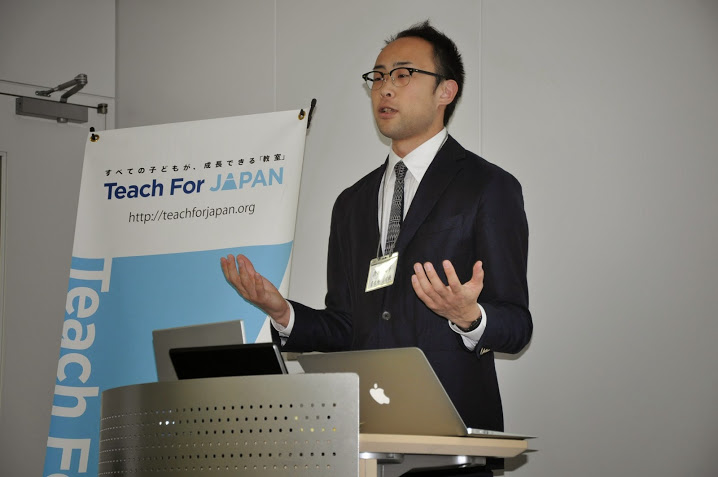
This evening, I was participating in the send-off party for these new participants. The strongest impression I had was that both those being sent off and the ones doing the sending off are very passionate and highly motivated.

In the short speeches each of the new teachers made, there was talk of various backgrounds, of  motivations for joining the TFJ program, of the trials faced in the three-week preparatory course, and of the fervent wish to help the children who needed their services.

It was a very moving and inspiring two hours. Among the participants, there were people who, after working in Tohoku in disaster relief operations as well as in NGOs, felt that education was the way forward and therefore had decided to step up to the challenge of the TFJ program. There was also a student who started thinking about the problems facing Japanese society after witnessing the social problems of South Korea during time spent studying there, as well as people who, after working for a few years, recognised problems that they felt needed to be addressed.

I strongly believe that it is the continued efforts of young people like these that will fundamentally change Japanese society, and although still in its nascent stages, it will act as a nucleus for bigger things to come.

I would really like to ask each one of you , my readers, to do whatever you can in order to help.

Before and After March 11th

→Japanese

As I mentioned in my blog post on the 11th of March, these past two weeks have been occupied by events related to the work I did in the capacity of the Chairman of the Fukushima Nuclear Accident Independent Investigation Commission by the National Diet, a commission that is the first of its kind in the history of Japan’s constitutional government.

At Tokyo University, I was invited to speak at an event organised by Kan Itou and his collaborators. Here I was invited to speak for 20 minutes about the NAIIC report, but unfortunately, that was all I did, as I left right after my speech to go to Ueno station to board a Shinkansen for Sendai in Tohoku. In a program titled ‘Sendai for Startups! 2014’, the group Impact Japan and the Sendai local government worked in tandem to provide a stage for entrepreneurs and business start-ups. Ms. Oikawa of Oikawa Denim (link in Japanese) presented as a local entrepreneur, while I presented Impact Japan’s new initiative in partnership with Sendai, IntilaQ.

This was followed by a lecture at Club Kanto, and then a 2-day meeting at the Swiss Embassy, after which I spent my weekend participating in an event organised by ‘The Simplest Explanation of the NAIIC’ and the Japanese Red Cross Society (link in Japanese), an event attended and by many high school and university students. It was an opportunity to learn of the ongoing struggle of the evacuees, showing the complexity of the damage caused by the triple disaster. As if this were not enough, I followed up with a visit to Bunkyo ward in Tokyo, and then had an opportunity to listen to Dr. Muto (link in Japanese), who is widely credited for having successfully introduced a new system of medical system into tsunami-devastated Ishinomaki city. The event was prepared by the Japan-North America Medical Exchange Foundation (JANAMEF) and fittingly spoke of the ever-changing situation in the world and how it affected the future of Japan.

Although change here in Japan is a slow and laborious process, there are some glimmers of hope in the actions of the young people of today. I wish them success in their endeavours!

Steps Towards Safer Nuclear Energy: The U.S.A GAO Report and the NAIIC Report

→Japanese

In any democratic setup, the separation of the three powers of the Government, administration, legislature and judiciary is a core necessity, with independent organisations  acting as watchdogs necessary for the proper functioning according to democratic principles.

The United States of America has the Government Accountability Office (GAO) to fulfill this role. Functioning under the legislative banch, ie, the Congress, it used to be called the General Accounting Office (the Japanese equivalent being the Board of Audit of Japan) till 2004, after which it changed to the present name.

This organization has recently published a report titled ”Nuclear Safety: Countries’ Regulatory Bodies Have Made Changes in Response to the Fukushima Daiichi Accident”, in which the NAIIC Report has been mentioned 6 or 7 times.

I am happy to have been part of the Commission, the first of its kind in constitutionally governed Japan, that has set a precedent for the further reforms that are urgently needed in the structure of governance in Japan. The NAIIC report has exposed the fragilities inherent in the present structure in a clinical and precise manner that can be likened to a medical check-up using a whole body CT scan, with us pointing out the problems that need to be remedied to the patient, in this case, the Japanese government.

A controversial point I made in the report was shown through my pinpointing Japanese ‘culture’ and ‘mindset’ as important causes of the accident, something for which I was heavily criticized by some media. However, the IAEA and the GAO have both acknowledged this proposition, judging from the fact that the IAEA is hosting a ‘Workshop on Global Safety Culture – National Factors Relevant to Safety Culture’, the 8th-11th of April. The first of its kind to approach Nuclear Safety from this standpoint, it is a encouraging response to the lessons learnt from Fukushima.

Interestingly, I have not been sent a notification nor an invitation by both the Japanese government and the IAEA. It is through an overseas colleague of mine that I heard about this workshop.

I had a similar experience in 2012. I leave you think about why, and to reach your own conclusions.

The 3rd Anniversary of March 11

→Japanese

Sorry for not updating my blog more often, but today is a day I must write. For the many people who have suffered the unimaginable, and continue to suffer in the aftermath of the events of 3.11, and the disaster at the Fukushima Daiichi Nuclear Power Plant, an event of such gravity that the Japanese government for the first time n her constitutional democratic history, set up an independent committee to investigate it, resulting in a report that has been submitted to both Houses in the Diet a year and 8 months go. I must write today because I was the chair of the committee that was in charge of the investigation.

Elsewhere in the world, many regions are gripped by drastic changes. Syria, Ukraine illustrate perfectly the tumultuous period that we live in. In sorry contrast, the unchanging situation in Japan is dominated by the political-industrial-bureaucratic complex, despite the glaring errors and gross negligence exposed in the aftermath of 3.11.

Yesterday (March 10th) was spent at the Japan National Press Club conference, in a two hour debate session with panelists such as G. Jazcko, the former chairman of the US Nuclear Regulatory Commission (NRC), Yotaro Hatamura, former chairman of the Investigation Committee on the Fukushima Nuclear Accident by the Cabinet, and Koichi Kitazawa, former chairman of the Independent Investigation Committee of the Fukushima Nuclear Accident by a private sector. The full video of the proceedings can be accessed here on Youtube.

With the time for reserved for each speaker as told to be limited to around 6 minutes, I showed them a short excerpt of a video titled ‘What is the NAIIC?’ to help the audience understand what was so different about this investigation as seen from the various documentation, reports and publications. I also introduced the notion of ‘Accountability’ into the debate. My aim was not to go into details but rather introduce the issue as a way of understanding the various processes involved in the functioning of a large society governed according to democratic rules, and of the constantly changing situation in Japan and abroad.

I think that accountability is important because we need to ascertain the mindset of what those in power, how committed they are to their responsibilities. I was also interested in what the audience had learnt from the accident, how they felt about the situation, and what they were changing in their own life styles and values in response to the accident. Most of the participants were in media-related jobs, ie, journalists, and I really wanted to question them on their understanding.

The South China Morning Post also featured an interview of me, please see the link. I am pleased to note that the video, ‘What is the NAIIC Report’ is also mentioned. My comments on Safecast have also been included.

All eyes are upon Japan as it deals with the aftermath of the Fukushima Nuclear Disaster. After all, there are 440 other such nuclear reactors in the world with the potential of causing similar accidents, plus 70 more under construction.

As greater information connectivity through Internet brings about an increasingly globalised world, transparency across all spheres, whether it be the state, the government, companies, media outlets, universities will be increasingly important in order to be trusted.

Schedule – February 2014

International Conference REvision2014: Global Energy Turnarounds and Japan’s Path
Date: February 25, 2014(Tue) 9:30am-5:10pm
Venue: Iino Hall (2-1-1 Uchisaiwaicho, Chiyoda-ku, Tokyo)
http://www.iino.co.jp/iinobuilding/english/location/access.html

Registration
https://jref.or.jp/event140225/index.php?lang=en


“Born Global ? Japanese Ventures on the Map Symposium 2014”
Date & Time: February 24, 2014(Mon) 1:00pm~5:00pm
Venue: Sokairo Hall, 1F, GRIPS
http://www.grips.ac.jp/en/about/access/

*Prior Registration Required
https://docs.google.com/forms/d/1Luil43EGnpJYNHDgiBVG9GZdSw5H2zMnhNYP7YhyhEU/viewform


“Nikkei Asian Conference Renewal of Our Commitment to Fight against Communicable Diseases”
Dates: February 14(Fri)-15(Sat), 2014
Venue: Okinawa Bankoku Shinryokan

Secretariat office: the Nikkei Asian Infectious Diseases Conference
PCO Works, Inc.
E-mail: okinawa2014@pcoworks.jp
Tel: +81-3-3291-3633, Fax: +81-3291-3635

*Prior Registration Required
http://ac.nikkeibp.co.jp/bio/okinawa0214e/index.html

January This Year

→Japanese

It has been quite a while since I have last written, not since the New Year.

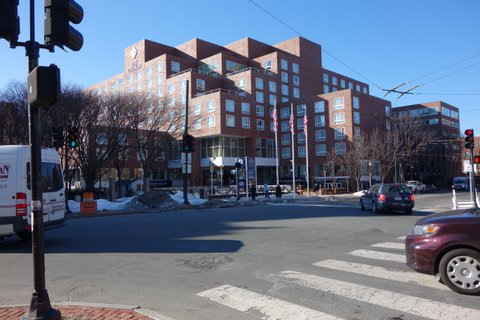
On January 10th, I travelled to Boston to attend a conference on the future of the Okinawa Institute of Science and Technology Graduate University (OIST). As there are many people on the board who are in Boston and New York, it was the most appropriate location. Mr. Hunt from the UK was also in attendance. The US east coast was covered with heavy snowfalls until the previous day but it calmed down from the 10th.

I stayed in Boston for two nights and then departed for Okinawa. I attended “The 1st International Symposium on Open Energy Systems,” held by OIST, where experiments and demonstrations were shown.

The future of energy policy will move forward to become more diverse, it will use local renewable energy sources and smart grids and increase ‘visualization’ with new App (applications) of energy use. Through this diversification, the awareness of the users of electricity will change, as happened with the rapid change of the internet (http- www- iPhone- iPad) in the 21st century, with an increase in accessibility due to the regulatory reforms, technological innovations and development of new software. Whether it is in the energy sector, politics, or companies, it is imperative that the leader provides a clear direction for the future of the global world affairs.

On the 18th, the Health and Global Policy Institute held its annual Health Summit. Many people participated along with the panelists and the organizers and had a very lively and enjoyable time.

Lots of things happened in the week of the 20th and I went to Sendai. I had the honor of reading the eulogy at the funeral of a friend who was long at Tohoku University. I met with his family, whom I had not seen for some time. The previous evening, I contacted Tohoku University and had a nice dinner with four female scientists representing the university.

On the 27th, I had afternoon tea with three British officials, Anthony Cheetham, the Vice-Chair of the Royal Society, Ambassador Hitchins, and Ms. Elizabeth Hogben, the Head of Science and Innovation at the British Embassy in Tokyo. I enjoyed the elegant afternoon.

On the 30th, the Health and Global Policy Institute had its first breakfast meeting of the year and I gave my annual seminar along with my greetings for the New Year.

This past month has flown by quickly.

Two Days of Back to Work

→Japanese


We enjoyed a long new year’s holiday before starting work in 2014. There must be many had to be back to work early in the year.

On the 6th, I attended several New Year’s gatherings.

On the 7th, I had a crazy schedule. At 8 am I had a seminar with thirty students from the Harvard Business School, who were brought by Professor Hirotaka Takeuchi. It was very fun and engaging. The main topic was the National Diet of Japan Fukushima Nuclear Accident Independent Investigation Commission (NAIIC) and we had discussions regarding its political and international significance and the status of the governance of Japan.

The afternoon was filled with various meetings. One was with an individual who is aiming to become a professional bilingual (Japanese and English) journalist. Another was an interview with a graduate student from the Harvard Kennedy School for her dissertation, introduced to me by her professor. Another was with an individual who is developing a new education program. This was followed by meetings regarding my keynote lecture for the Science Council of Asia, to be held in June in Kuala Lumpur.

In the evening, I had two engagements, and the last was with Dr. Graham Fleming, the Vice Chancellor for Research at UC Berkeley as well as a few other people. I was out until past 11 pm.

On the 9th, I head to Boston.

December: Many Meetings and Busy Days

→Japanese

Following the seminar by Dr. Garrett on December 2nd, the Global Conference on Universal Health Coverage, organized by the World Bank and the Japanese government (1), was held on the 5th and 6th.

President Jim Yong Kim gave an excellent key note speech, and I had the opportunity to speak with him. At the time when President Kim worked at the World Health Organization (WHO), I was the WHO Commissioner, so we knew each other indirectly.

On the afternoon of the 6th, I went to Tokai University where I was Dean of Medical School (1996-2002) for the first time in in last few years and gave a special seminar. On the 7th, there was a conference at the University of Tokyo, hosted by the Graduate School of Public Policy, with the Global Public Policy Network (GPPN) Fukushima Nuclear Power Plant Accident. The moderator was Mr. Nobuo Tanaka, a leading figure in international energy policy.

On the 9th, I had lunch at the French Embassy with Ambassador Philippe Meunier, who is the ambassador in charge of measures against AIDS and Communicable Diseases.

On the 11th, there was a meeting hosted by the Health and Global Policy Institute and held at the international conference center in the Parliament, which welcomed Governor Patrick of Massachusetts of the United States. Professor John Hamalka of Harvard University also participated via Skype. This turned out to be an outstanding conference and the governor seemed very satisfied. In the evening, there was a reception at the US Embassy, hosted by Ambassador Kennedy, there were many people there and it was a bit hectic.

On the 12th and 13th, I attended the Asian Innovation Forum with Mr. Idei, which I have already written about.

On the 14th, I headed to Abu Dhabi. There was a board members meeting of Khalifa University of Science and Technology (KUSTAR) in Abu Dhabi, there I had spent a few days just three weeks ago.

In the afternoon of  the 15th after a break upon arrival, the President of KUSTAR gave a presentation to the three international board members, and the next day, 16th, the board members meeting had a good discussion and future planning.

After lunch, I enjoyed playing some golf at the wonderful Yas Links course, and then headed to the airport.

I returned Tokyo on 17th. After arriving home, I rested a bit and then in the evening had dinner with Erik Solheim at the Embassy of Norway. Mr. Solheim aimed to be a politician since his youth, has been a minister, and has contributed significant work as a Cabinet member of the Government and the world in peace keeping mission of Sri Lanka.

It has been very busy month, but I have been able to enjoy meeting many incredible people.

Seminar by Laurie Garrett

→Japanese

Dr. Laurie Garrett is an incredible individual who is currently a Senior Fellow of the Council on Foreign Relations. We had the opportunity of having her come to GRIPS during her one week stay in Japan. She has an amazing career, starting out as a researcher in biology and going on to win the Pulitzer Prize in journalism.

She expresses and writes on Global Health that are based on her work in the field, and I first started to work with her after her 2007 Foreign Affairs paper. As you can see in the photograph in this blog post, she highly respects Nelson Mandela, who passed away recently, and she even has a life size replica of Nelson Mandela in her room.

She kindly agreed to be a jury member to select the winner of Noguchi Hideyo Africa Prize in 2008 (and in 2013) when I was the Chairman. I was grateful to have her on the committee as her opinions are based on observations from the field and deep judgment.

This made me remember something that happened when I was at the Davos World Economic Forum. When I introduced Ms. Sadako Ogata to her, she started to shed tears. I asked what happened and she replied that she respects Dr Ogata so much that she could not help but be moved to tears.

Around fifty people were at her seminar at GRIPS and it was very well received. Afterwards, many people sent emails to me expressing their thanks.

The seminar was based on the her recent article “Biology’s Brave New World: The Promise and Perils of the Synbio Revolution”.

There are also the following her interviews/articles on the Council on Foreign Relations

1) Staying Safe in a Biology Revolution

2) Making the New Revolutions in Biology Safe

3) H5N1; A Case Study for Dual-Use Search

It is difficult to predict where biotech will go from here. However, what can be said is that ICT, nano, bio will keep moving forward and that humankind will move towards Singularity1).

One wonders what kind of world we will be in the future.